
New Episode
Short Summary
In this episode of the Legacies Podcast, host Tom Ritchie sits down with Mike Dunn, co-founder and owner-operator of 1922. They trace Mike’s twelve-year career in telecommunications pricing and marketing at Rogers and Bell, his transition to the cannabis industry, and the capital challenges of holding a retail space for eighteen months ($75,000 in pre-revenue costs) during Ontario’s early transition to a lottery licensing model.
Dunn describes the strategic decisions behind 1922’s inclusive retail environment, which uses welcoming design cues inspired by Toronto’s St. Lawrence Market to build a diverse customer base. He breaks down the gender demographics of adult-use purchasing, detailing how women spend significantly more per transaction on average in-store and online, and how retail environment design directly impacts these purchasing behaviors. Dunn also outlines how 1922 competes with unlicensed retail operations by focusing on frictionless checkout experiences and round-dollar pricing.
In the second half, Dunn and Ritchie analyze local delivery operations, comparing traditional batch delivery models to 1922’s on-demand ‘pizza delivery’ model. Dunn discusses the logistics of managing e-bike fleets (partnering with Super73), the importance of owning customer data and loyalty channels, and transitioning customers from third-party marketplace dependencies to direct e-commerce platforms (such as Breadstack).
Tom Ritchie Says: All right, everyone! We’ve got a special episode for you this week. We are joined by Mike Dunn, co-founder, owner, and operator of 1922 Cannabis Dispensary in Toronto—one of the best, if not in your words, the best shop in the city. Mike, thanks for joining Legacies, man. Appreciate it!
Mike Dunn Says: Thanks for having us on, guys! Thrilled to be here.
Tom Ritchie Says: This has been a long time in the making. You’re very vocal about what’s happening across the industry. There’s a lot of crazy stuff going on, but I also get excited about the technology and how sharp operators are evolving. Before we dive into all that goodness, are you Australian? When I was looking at your background, I saw you studied in Sydney.
Mike Dunn Says: Yeah, I did my undergrad at the University of Sydney.
Tom Ritchie Says: How was the weed in Australia back then?
Mike Dunn Says: Terrible. It was terrible, and I think many would say it probably still is. Nowhere close to where Canada is at today.
Tom Ritchie Says: I watched and helped with some of their rollout as they transitioned into medical, and I was praying, “Please don’t copy all of Canada’s early mistakes.” Everyone looks at Canada as the blueprint, but retail operators get stuck right in the middle between the AGCO, provincial regulators, and the OCS. Before opening 1922, what were you doing? Did you win a lottery licence?
Mike Dunn Says: That’s a loaded question! I spent about twelve years in corporate telecommunications at Rogers and Bell in core marketing capacities—predominantly pricing, revenue operations, and sales enablement. In telecommunications, pricing plan SKUs power every single division of the business, so it was a high-contribution, high-influence role. By the time I turned 35, it had given me incredible professional and financial experiences, but the executive boardroom environment stopped being stimulating.
Mike Dunn Says: My wife Brooke, who co-founded 1922 with me, was finishing her doctorate in sociology and realized she didn’t want to become a university professor. We pivoted quickly and launched a grant-writing and proposal firm where she managed around twenty consistent clients. While she was thriving in entrepreneurship and I was sitting in executive boardrooms in a suit every day, I started looking for my own entrepreneurial vehicle.
Mike Dunn Says: Out of pure curiosity, I started obsessively studying the cannabis sector—nerding out on public market data and regulatory rollouts in Colorado and Washington. When rumblings of Ontario privatizing retail emerged, I realized that cannabis had no defined legacy corporate talent pool to poach from. Dealing with multi-channel complexity, intense competitive pressure, and scrappy day-to-day execution was identical to the bare-knuckle brawl of telecom. To me, jumping into cannabis didn’t feel intimidating—it felt familiar.
Mike Dunn Says: When we committed, we went all in. We incorporated, built the brand, put our money where our mouth was, and leased a prime brick-and-mortar retail space in downtown Toronto before holding a licence. We prepared our application to meet the original free-market criteria. Literally twelve hours before applications opened, the provincial government scrapped the plan and switched to the retail lottery system.
Mike Dunn Says: We held onto that empty, renovated retail space for eighteen months before recognizing a single dollar of revenue. I threw $75,000 of rent and insurance into the ether just to preserve our location. When people hear me speaking intensely today, it stems from that crucible. Sitting in an empty storefront paying rent for a year and a half with zero guarantee you’ll ever open forces an operator into an uncompromising mindset: if you survive that wait, you cannot afford to come out of the gate anything less than flawless.
Tom Ritchie Says: That context explains so much. You’re not just an investor—you’re a true owner-operator in the shop daily, managing inventory and running deliveries yourself. What was your original vision for an ideal Ontario dispensary?
Mike Dunn Says: I focused on the financial decimal points—what does the business model require to keep the doors open? Brooke leveraged her sociology background to tackle the harder question: what is the cultural problem? What is the stigma, the history, and the social construction of cannabis retail?
Mike Dunn Says: Early data from Colorado, Washington, and early Alberta dispensaries revealed a fascinating divide: plant consumption was roughly 50/50 between men and women, but retail purchasing was overwhelmingly male. Furthermore, data demonstrated that female shoppers spend a third more than males in-store, and nearly two-thirds more online.
Mike Dunn Says: We reframed our entire concept around that insight. We needed to build an inclusive, welcoming, non-threatening space—no blacked-out frosted windows, no intimidating security guards at the door, and no hyper-masculine dispensary tropes. Living in downtown Toronto, we drew inspiration from St. Lawrence Market: personal, endearing, rapid interactions where you chat with the vendor, make your purchase, and keep your day moving.
Mike Dunn Says: Early venture capital consensus insisted that massive retail square footage and high rent directly correlated with sales volume. Raising money to build cavernous 3,000-square-foot stores was easy to pitch to investors, but it was flawed retail economics. We chose to remain steadfast in building a nimble, neighborhood-focused QuickServe model built for the long haul.
Mike Dunn Says: Let me ask you a question, Tom. Out of a hundred delivery orders, what do you think the gender split is between men and women?
Tom Ritchie Says: Based on audience metrics, I’d guess maybe 50/50, or maybe guys are lazier and use delivery more?
Mike Dunn Says: When we first launched delivery, it was over 75% male. Over time, that completely shifted heavily toward women. That showed us that traditional brick-and-mortar dispensary experiences were so uninviting to female consumers that they would rather order delivery from across the city than walk downstairs into a dispensary located in their own condominium lobby. Unpacking that friction proved our original thesis: customer experience and convenience dictate longevity.
Tom Ritchie Says: Were there illicit storefronts operating in your immediate neighborhood when you opened?
Mike Dunn Says: We were store number 56 in Ontario when we opened nearly five years ago—one of the very first independent dispensaries in downtown Toronto alongside the initial corporate chains like Tokyo Smoke and Fire & Flower.
Tom Ritchie Says: Across Toronto, operators face an uphill battle against unregulated and illicit storefronts. Municipalities complain about lack of resources while collecting millions in provincial revenues. How do you compete against illicit operators right on your doorstep?
Mike Dunn Says: It’s complex. First, you endure an emotional period of frustration. But eventually, you have to accept reality: I can spend my day crying about unfairness, or I can focus on making my business bulletproof. Over the past 24 months, I had two illicit dispensaries open within 200 meters of me, plus another legal dispensary open within 100 meters. I’ve watched eight stores open and shut down in our immediate radius.
Mike Dunn Says: Rather than ignoring the illicit competition, I studied them. While their visual merchandising isn’t our aesthetic, their awareness is undeniable: when consumers see their signage, they instantly know cannabis is sold there. More importantly, they excel at frictionless transactions.
Mike Dunn Says: In a legal store, budtenders often talk in confusing pre-tax decimals—quoting $3.30, ringing it up, and asking for $4.42. Illicit customers look at that confusion and walk away. We sharpened our operations: our single pre-rolls are priced at exactly $4.42 pre-tax so they ring up as a crisp, flat $5 bill. Cash crosses the counter, product is handed over, and the customer is on their way in seconds.
Mike Dunn Says: We also created the “Moss Park Special”—a rotating $20 eighth with two clean cultivar options and zero menu confusion. In and out in fifteen seconds. Eliminating friction at the point of sale is how you convert legacy shoppers into the legal framework.
Mike Dunn Says: In October, when the two illicit shops near us were temporarily raided and shuttered, an influx of neighborhood foot traffic walked through our doors. Their first remark was, “We had no idea you were a dispensary!” That was a humble slap in the face. Because I had been so hyper-focused on delivery logistics, I had neglected exterior storefront communication. We immediately deployed branded A-frame sidewalk sandwich boards and refreshed our exterior aesthetics.
Tom Ritchie Says: What about the legal dispensary opening 100 meters away? Does the AGCO have spacing or buffer zone rules between retail storefronts?
Mike Dunn Says: Beyond distance requirements from schools, the AGCO operates on a free-market framework. The regulator isn’t there to act as parents arbitrating playground arguments—the market decides who survives. Opening a half-million-dollar retail buildout directly beside an entrenched, battle-tested independent operator is a massive commercial gamble. We didn’t choose the fight, but when competition arrived on our doorstep, we put our hard hats on and defended our turf.
Tom Ritchie Says: Let’s talk about retail technology. Early on, the industry defaulted to templated online menu providers like Dutchie, where every store looked identical and retailers surrendered their customer data.
Mike Dunn Says: Three years ago, I saw the writing on the wall: venture-backed software providers were restructuring terms of service to morph into centralized marketplaces. When a third party controls checkout, menu discovery, and customer records, they own your business. You cannot build genuine brand loyalty on rented real estate.
Mike Dunn Says: As an independent single-store operator, partnering with Breadstack to launch an enterprise-grade, custom WooCommerce e-commerce platform was a monumental step. We regained complete control of our customer data, sales funnel, and online merchandising. It allowed us to execute a sophisticated customer acquisition funnel: leveraging third-party marketplaces for top-of-funnel reach, then converting those consumers into loyal direct shoppers on our own platform.
Tom Ritchie Says: You’ve become synonymous with urban cannabis delivery. Was delivery always part of the master business plan?
Mike Dunn Says: Absolutely not! I signed up to run a neighborhood brick-and-mortar shop. Delivery was born out of sheer survival during COVID-19 lockdowns. Retail foot traffic collapsed, and without a multi-million-dollar digital marketing budget, we faced insolvency if we didn’t innovate.
Mike Dunn Says: When Uber approached us about pioneering regulated cannabis delivery partnerships, my initial instinct was skepticism. But we leaned in. I bought a Fuji Feather single-speed road bike, slung a backpack over my shoulder, and literally started pedaling deliveries across downtown Toronto myself with my team. We turned that experiment into a half-million-dollar revenue stream.
Mike Dunn Says: Most cannabis delivery operations adopted scheduled batching—order before 2:00 PM for delivery between 5:00 PM and 8:00 PM. That works for warehouse efficiency, but it fails urban consumers. One evening, sitting at Matty’s Patties burger joint watching eighteen orders get prepped and dispatched in fifteen minutes, the realization hit me: urban delivery needs to operate like a high-speed pizzeria.
Mike Dunn Says: When people order cannabis in the city, they want it immediately. We abolished broad delivery windows, established tight delivery radii between 500 meters and 5.5 kilometers, and optimized for rapid dispatch. Our order volume quadrupled instantly. To make fast-and-free delivery commercially viable, we transitioned from acoustic bicycles to high-performance Super73 electric motorbikes from California. They allow our couriers to navigate urban bike lanes legally, safely, and efficiently while reinforcing our brand aesthetic.
Tom Ritchie Says: How many deliveries are you handling today compared to the early four-to-seven order runs?
Mike Dunn Says: Yesterday, I personally ran 41 deliveries on top of our in-store customer traffic. Delivery now represents roughly 40% of our daily transactions. Running that volume alongside an active retail floor requires serious logistical dispatch software to route couriers, manage notifications, and track orders in real time.
Mike Dunn Says: Our benchmark is reaching 100 delivery orders per day from our single location. That represents a seven-figure annual revenue stream from delivery alone. We use the Domino’s and McDonald’s playbook: use third-party aggregator channels to capture hungry, high-intent consumers, then provide an exceptional experience that migrates them over to our proprietary app and website for exclusive deals and loyalty perks.
Tom Ritchie Says: Why haven’t the large corporate dispensary banners successfully scaled on-demand delivery like 1922?
Mike Dunn Says: Large corporate operators are trapped by their original capital-raising thesis. Between 2018 and 2020, they raised hundreds of millions of dollars on a commercial real estate expansion model—promising investors that securing retail corners across the province would guarantee market dominance. Admitting today that brick-and-mortar foot traffic is challenged and pivoting capital into complex delivery logistics is nearly impossible to justify to a corporate board.
Mike Dunn Says: Operating high-touch retail and urban delivery logistics under one roof requires completely different operational skill sets. Hired-gun corporate executives rarely possess the appetite to spend sixteen hours a day in the trenches refining courier dispatch. That operational gap gives independent, battle-tested owner-operators our competitive advantage.
Tom Ritchie Says: Where do you see the Ontario retail landscape converging over the next three to five years?
Mike Dunn Says: In my crystal ball, you have large discounters like Canna Cabana and Value Buds competing on sheer store count. Mid-major chains like One Plant, Sessions, and Pops Cannabis are expanding rapidly and nipping at their heels. On the other end, nimble, tech-enabled independent operators who master customer ownership and localized delivery will thrive as the counterweight.
Mike Dunn Says: Within the next few years, corporate chains will attempt to acquire or build delivery solutions. But the operators who survive will be those who bridge retail and digital logistics without sacrificing either customer experience.
Tom Ritchie Says: Mike, your transparency, grit, and operational insights are second to none. Thank you for taking time out of your busy schedule to join us on Legacies!
Mike Dunn Says: Thank you, Tom! It means the world. Cannabis deserves to be platformed with credibility, sophistication, and authenticity, and you’re doing an incredible service for this industry. Appreciate you having us on!
Jump to 01:28
Jump to 04:12
Jump to 03:35
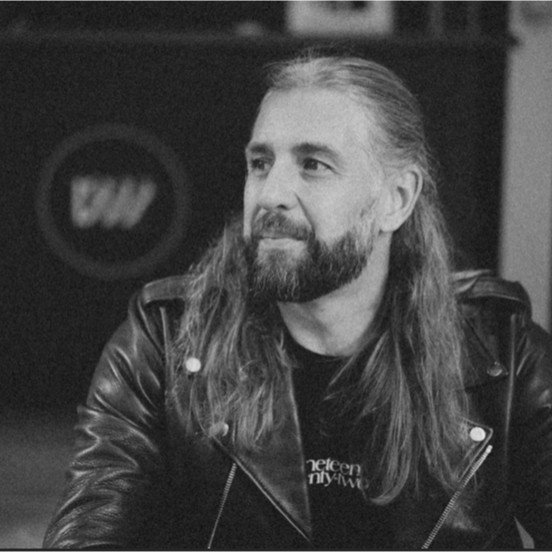
Co-Founder & Owner-Operator
Mike Dunn is the co-founder and owner-operator of 1922, an independent adult-use cannabis dispensary and delivery service in Toronto, Ontario.
View Guest Profile ↗
Independent Cannabis Retailer & Delivery Operator
1922 is an independent adult-use cannabis retail storefront and delivery service based in Toronto, Ontario. Named to commemorate the last...
Learn More About Partner ↗1922 optimizes in-store transaction friction (such as adjusting pre-tax prices to exact dollar amounts for seamless checkout) and focuses on building customer loyalty through a proprietary digital platform rather than relying on third-party aggregators.
Unlike traditional batch-delivery operations that group orders for daily windows, 1922 uses a localized on-demand model (similar to quick-serve pizza delivery) executed via eco-friendly Class 2 e-bikes (such as Super73) to lower delivery times and offer free shipping within target neighborhood segments.
Owning the e-commerce sales channel (partnering with custom providers like Breadstack) allows retailers to directly control their customer relationships, manage marketing communications, and build loyalty, whereas relying on third-party marketplace platforms isolates the business from its own customer demographics.