
New Episode
Short Summary
In this episode of the Legacies Podcast, host Tom Ritchie welcomes Eli Korer (CEO & Co-Founder) and Dylan Thiel (CTO & Co-Founder) of Dabstract. Dylan details the brand’s origins in Washington State’s early recreational market, reflecting on his legacy gray-market hydrocarbon extraction trials and the challenge of introducing advanced concentrates (such as high-terpene sugar and live resins) to a market that was accustomed to traditional shatter slabs.
Eli, who joined the company in 2018 as general counsel, outlines Dabstract’s transition from a regional Washington processor to a multi-state brand operating under parent company Union Cannabis Group (UCG). He breaks down the advantages of their asset-light brand licensing model, which allows Dabstract to deploy its proprietary formulations, equipment, and brand equity across multiple states—including Illinois, Missouri, Michigan, and Washington—without the capital expenditure of building vertically integrated facilities in each jurisdiction.
In the second half, the discussion focuses on partnership vetting, market entry, and product strategy. The guests share details of their nine-point strategic partner evaluation framework, which assesses cultivation quality, distribution capacity, and management stability. They evaluate the challenges of entering volatile markets like New York, discuss the role of budtender education in driving concentrate sales, and analyze the rising hemp-derived cannabinoid market. Finally, they detail their strategic expansion plans, including entering Massachusetts and their partnership with Spring Sciences Australia to enter international markets.
Tom Ritchie Says: Welcome to Legacies, everyone! Legacies is brought to you by AVEO, leaders in sustainable vape hardware. I’m joined this week by Eli Korer and Dylan Thiel of Dabstract, a popular, multi-award-winning cannabis brand under Union Cannabis Group. Gentlemen, welcome to Legacies!
Eli Korer Says: Thanks, Tom! Really happy to be here.
Dylan Thiel Says: Thanks for having us on, Tom.
Tom Ritchie Says: You guys have achieved immense success across the United States. Operating across multiple states is a completely different beast than our national framework in Canada. Dylan, you and your brother Derek have built Dabstract from the ground up through relentless craftsmanship. Where was Dabstract born, and what were you doing prior to founding the brand?
Dylan Thiel Says: Derek and I spent several years operating in the legacy gray market—Derek for about four years, and myself for a year and a half. That was right when butane hash oil (BHO) extraction first emerged, open-blasting outdoor trim coming off the hills in Northern California. We were extremely early adopters of closed-loop hydrocarbons—we actually operated Greywolf’s seventh extraction system ever built.
Dylan Thiel Says: The illicit market wasn’t sustainable for us. When Washington and Colorado legalized adult-use cannabis, we seized the opportunity. We secured a license in Cle Elum, Washington, and began building out an extraction facility in a glorified mountain garage. We brought in some of the largest equipment available at the time, including Precision’s first KX Pros and a massive PX40 machine that virtually no one else knew how to run.
Dylan Thiel Says: We faced extreme startup adversity. We tried cultivating in the Cascade Mountains and had winter blizzards collapse our greenhouses. But those brutal early years forced us to innovate. We were one of the very first extractors in Washington to introduce terp sugar—a wet, terpene-rich THCA consistency. At the time, consumers only understood glass shatter and complained, “Where is my shatter? This looks like butane soup!” Today, shatter has virtually disappeared and terp sugar is a market staple.
Dylan Thiel Says: Washington was arguably the most competitive extraction market in America. We had about twelve top-tier concentrate brands pushing each other relentlessly. If you didn’t innovate daily, you went bankrupt. For seven straight years, we worked twelve-hour days, seven days a week. We were among the first to isolate THCA crystalline, creating our signature High Terpene Extract (HTE) formulations that remain our cornerstone today.
Tom Ritchie Says: Why invest in massive industrial machinery right out of the gate instead of scaling gradually?
Dylan Thiel Says: We were ambitious dreamers. Coming from an engineering background, my instinct was to build for scale from day one. In concentrates, your name is your reputation. Extractors are wired differently—if my name is on the jar, that product has to represent an uncompromising standard of purity and terpene expression.
Tom Ritchie Says: Dylan, at what point did you realize you needed a powerhouse corporate attorney? Eli, how did you enter the fold?
Dylan Thiel Says: I spent too much time doing legal work early on and quickly realized contracts were not my forte. We needed a heavyweight attorney to protect the company.
Eli Korer Says: In 2018, I was practicing corporate M&A, securities, and commercial law in Chicago, serving as outside general counsel to high-growth entrepreneurial businesses. My brother actually connected me with Union Cannabis Group. I knew very little about cannabis at the time, but I was blown away by the exceptional quality of Dabstract’s products, their sales velocity, and the character of Derek and Dylan.
Eli Korer Says: Dylan and Derek are what I call “operators’ operators”—you can put them in any room with any master cultivator or chemist, and their depth of technical knowledge commands immediate respect. I recognized an enormous runway to scale Dabstract from a Washington powerhouse into a respected national multi-state brand. I started as General Counsel and gradually transitioned into an executive leadership role managing strategic capital and multi-state expansion.
Tom Ritchie Says: Unlike massive, vertically integrated MSOs that buy real estate in every state, how does Dabstract structure its multi-state presence?
Eli Korer Says: Because federal law prohibits transporting cannabis across state borders, large MSOs spent hundreds of millions of dollars building duplicate vertical facilities across multiple jurisdictions. We chose an asset-light brand licensing model. We partner with elite, well-capitalized local operators who already hold cultivation, manufacturing, and retail distribution licenses in their home states.
Eli Korer Says: We bring our proprietary extraction SOPs, specialized hardware, brand equity, and marketing engine to their operation. Our success depends entirely on partner alignment. In Illinois, for example, we partnered with an exceptional, woman-owned independent vertical operator with premier cultivation and dispensaries. That alignment created immediate reciprocal retail distribution.
Tom Ritchie Says: What is your criteria when evaluating potential processing partners in newly opened states?
Dylan Thiel Says: It comes down to operational capability. Within five minutes of walking through an operator’s facility, we know whether they understand clean commercial manufacturing. We need partners with diverse genetic libraries and proven master growers. If an operator struggles to scale beyond a basement setup, they cannot supply the input volume our concentrate lines demand.
Eli Korer Says: Our CFO, Adam Sisking, developed a nine-to-ten-point weighted matrix assessing capital reserves, supply chain reliability, and management stability. However, cannabis partnerships are as much art as science. We often initiate a relationship incrementally—launching first with vape cartridges, expanding into concentrates, and then introducing all-in-one devices as mutual trust compounds. That phased cadence proves operational compatibility over time.
Tom Ritchie Says: Every major brand rushed into New York when adult-use launched. Why did Dabstract take a measured approach?
Eli Korer Says: Entering a market requires timing. In New York, the initial launch was hampered by severe regulatory bottlenecks, onerous tax structures, and thousands of illicit storefronts operating with impunity. Rushing into that environment burns precious capital. We prefer limited-license states with stable retail margins and regulatory clarity. Being first to market is meaningless if your operating partner faces commercial insolvency six months later.
Tom Ritchie Says: With advertising strictly restricted across North America, how do you generate sustained retail velocity?
Dylan Thiel Says: Budtenders sell your product—period. If a frontline budtender doesn’t believe in your brand or understand your extraction process, your product will languish on the shelf. We prioritize budtender education, comprehensive product sampling, and direct engagement. When budtenders experience our true terpene retention firsthand, they become our most passionate brand ambassadors.
Tom Ritchie Says: In legacy states like California, counterfeit vape packaging has plagued major brands. Has Dabstract encountered illicit counterfeit hardware?
Dylan Thiel Says: Fortunately, we’ve largely avoided counterfeit issues. Brands like Cookies and 710 Labs faced widespread packaging piracy coming out of overseas manufacturing hubs. By partnering directly with leading hardware manufacturers like AVEO and maintaining rigorous closed-loop supply chains, we ensure authentic product delivery to licensed retailers.
Tom Ritchie Says: What is your perspective on the explosion of hemp-derived intoxicating cannabinoids like Delta-8 and converted THCA sold in mainstream retail?
Dylan Thiel Says: From a chemistry and consumer safety standpoint, I have profound concerns. Unregulated operators are using harsh chemical catalysts to synthesize CBD into Delta-8, Delta-9, or THCA products. These products are sold in convenience stores and gas stations without mandatory batch testing for residual reagents, heavy metals, or mold. While low-barrier consumer access is appealing, unregulated manufacturing without rigorous safety standards puts public health at risk.
Eli Korer Says: It creates a bizarre regulatory paradox: state-legal cannabis is federally prohibited, while intoxicating hemp products exploit a federal loophole under the Farm Bill while facing increasing state bans. While some operators use hemp to generate untaxed cash flow, Dabstract remains strictly focused on building enduring value within the regulated adult-use market.
Tom Ritchie Says: Multiple publicly traded MSOs are reporting steep losses and tens of millions in unpaid 280E tax liabilities. Does distress create acquisition opportunities?
Eli Korer Says: We are seeing the emergence of the “finance operator”—distressed private equity groups acquiring stranded cultivation and retail assets across multiple states. These financial platforms possess real estate but lack authentic, high-velocity consumer brands. That dynamic creates exceptional licensing opportunities for Dabstract. Capital is returning to disciplined operators who possess real cash flow, strong intellectual property, and authentic consumer demand.
Tom Ritchie Says: Michigan is notorious for severe wholesale price compression. How did you enter that market successfully?
Eli Korer Says: Michigan is hyper-competitive. Instead of introducing our entire 15-SKU catalog and spending hundreds of thousands of dollars on advertising, we launched exclusively with our premium all-in-one vape device. The hardware performance and terpene quality resonated instantly with connoisseurs, and our partner struggled to keep inventory on shelves. Tailoring product entry to each state’s specific competitive dynamics is vital.
Tom Ritchie Says: Dylan, how much of your R&D is dedicated to new formulations versus sourcing exotic genetics?
Dylan Thiel Says: My primary mission is introducing unique genetic terpene profiles to consumers. The industry remains stuck in simplistic Indica, Sativa, and Hybrid labels. In reality, physiological effects are dictated by complex terpene and minor cannabinoid interactions. We refuse to use artificial botanical terpenes or synthetic additives. We extract 100% cannabis-derived terpenes directly from fresh frozen flower, preserving the authentic genetic voice of each cultivar.
Tom Ritchie Says: Will Canadian consumers ever see Dabstract products on provincial shelves?
Eli Korer Says: We are actively evaluating the Canadian market. Because Canadian wholesale pricing is compressed, entering Canada requires a partner with exceptionally low cultivation costs and high-capacity manufacturing. We look for partners who can support our “31 flavors” variety model, offering continuous genetic rotations that build brand loyalty.
Eli Korer Says: Internationally, we are exploring medical export partnerships in Germany, the UK, and Australia. In Australia, distribution is driven entirely through medical physician networks rather than dispensaries. Adapting to local regulatory frameworks while maintaining product excellence is our expansion blueprint.
Tom Ritchie Says: Where will Dabstract and Union Cannabis Group stand five years from today?
Eli Korer Says: In five years, Dabstract will operate across ten to twenty states with established international medical distribution. We will continue expanding our footprint while maintaining the highest product standards in every market we enter.
Dylan Thiel Says: Our goal is national household recognition. Whether a consumer buys Dabstract in Washington, Michigan, Illinois, or Massachusetts, they receive the exact same pristine, connoisseur-grade concentrate experience. We stand behind every product we manufacture.
Tom Ritchie Says: Eli, Dylan, your passion, scientific rigor, and strategic discipline are truly inspiring. Thank you for joining us on Legacies!
Eli Korer Says: Thank you, Tom! It’s been an absolute pleasure.
Dylan Thiel Says: Thanks for having us on, Tom. Appreciate it!
Jump to 01:28
Jump to 04:12
Jump to 03:35
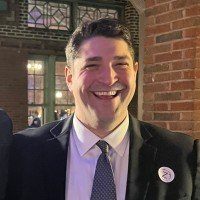
CEO & Co-Founder
Eli Korer is the CEO and Co-Founder of Union Cannabis Group (UCG) and Dabstract. He is an attorney specializing in M&A, securities, and multi-state expansion.
View Guest Profile ↗
Cannabis Concentrate Brand
Dabstract is an award-winning adult-use cannabis extraction and concentrate brand. Under the parent company Union Cannabis Group (UCG), Dabstract specializes...
Learn More About Partner ↗Rather than acquiring expensive vertical licenses in every state, Dabstract operates on an asset-light brand licensing model, partnering with established, licensed local operators who produce Dabstract concentrates under strict quality control, proprietary processes, and genetic libraries.
Dabstract takes a conservative, data-driven approach to new markets. For instance, rather than rushing into New York's opening, they wait for regulatory tax structures to stabilize and for enforcement mechanisms to clear out illicit retailers before committing capital.
Because public advertising is highly restricted in the cannabis industry, budtenders serve as the primary educators for consumers. Helping budtenders understand the science behind terpene preservation and closed-loop extraction directly influences what products they recommend to retail shoppers.