
New Episode
Short Summary
In this educational episode of the Legacies Podcast, hosts Tom Ritchie and Wesley Bowles discuss the AGCO window covering restrictions in Ontario and call on retailers to flood customer service contacts to demand policy changes. They analyze Health Canada’s inaugural testing report of 100 retail samples, which revealed that 94% of illicit cannabis samples contained three or more banned pesticides, whereas regulated products were substantially cleaner. They also evaluate BC Bud Co’s regulatory filing to pivot its public company portfolio from cannabis to digital assets and precious metals. The hosts review recent retail product innovations, including THCA diamonds happy sticks and wrapped hash pre-rolls.
Later, they welcome Seth Yakatan, co-founder of Katan Associates. Seth draws on his 25 years of investment banking and institutional investment experience to analyze Canadian public capital market cycles. He evaluates the structural barriers preventing US institutional private equity and pension funds from investing in cannabis due to federal scheduling, and outlines how business valuations will eventually shift to Consumer Packaged Goods (CPG) models as the sector matures globally toward 2030.
Tom Ritchie Says: Hey, what’s going on, everyone? Check out what’s coming up this week on Legacies.
Wesley Bowles Says: I wonder if you can just pick your teeth with it and get it right in your gums, just inject it right in! It looks just like a toothpick, though.
Ryan Lindsay Says: The Trades was the number one Canadian show on Crave in 2024.
Seth Yakatan Says: Dude, they’re coming for me, bro. They’re coming for me! Okay, they didn’t want me stateside, brother.
Tom Ritchie Says: Welcome to Legacies, everyone!
Tom Ritchie Says: I’m your host, Tom Ritchie, joined by Wesley “The Wizard” Bowles. Wes, good morning, sir. It’s very bright in here today!
Wesley Bowles Says: Good morning! I think it’s the sun reflecting off all the snow outside around Burlington. It’s definitely much brighter than usual.
Tom Ritchie Says: Yesterday felt like the first day of spring! We have to talk about the weather every single time now—it’s an official podcast ritual.
Wesley Bowles Says: It’s nice that our parking lot is finally starting to melt. How many spots did they lose with all those snow banks?
Tom Ritchie Says: At least half of them! After that first big storm, I shoveled my car out in the morning, got the space completely clear, and five minutes later the plow came through and buried everyone right back in. I was furious! They did one pass through the whole lot.
Wesley Bowles Says: Do they have those smart plows here in Ontario that drop a gate to avoid burying the ends of driveways? In a commercial lot like ours, once the piles get too massive, property managers actually have to hire trucking companies with heavy equipment to haul the snow away off-site. That costs a fortune just to remove frozen water that melts on its own!
Tom Ritchie Says: Maybe we should get into that business. Though I definitely don’t want to be up at three in the morning in the freezing cold! But in this industry, the news never slows down. Some weeks there’s a slow drip, and other weeks it’s an absolute avalanche.
Tom Ritchie Says: The story that’s infuriating and disgusting is the string of armed robberies targeting dispensaries across Ontario. It feels like another store is hit every other day.
Wesley Bowles Says: It’s relentless. And when the AGCO is called out, there is zero PR, no spokesperson, no statement—complete silence.
Tom Ritchie Says: I know independent retailers have reached out. Jas is involved with a WhatsApp group representing over four hundred independent store owners. Here’s the core issue: window coverings aren’t strictly mandatory in Ontario, but the regulations state that cannabis products and menus cannot be visible from the street. So retailers are forced to put up window coverings, film, or facades. That prevents anyone outside from seeing in, which puts staff in direct harm’s way!
Tom Ritchie Says: Other provinces eliminated this requirement long ago. We operate in a cashless society now—these thieves aren’t getting bags of cash, yet employees’ lives are being endangered. I went digging on the AGCO website looking for a direct cannabis contact email. It doesn’t exist! There’s only a generic contact form. We’re not a priority to them.
Tom Ritchie Says: If everyone listening wants to make their voice heard, email customer service at customer.service@agco.ca, or call them directly at 1-800-522-2876. Operators are standing by. Let them know how dangerous and outdated this rule is. Flood their inboxes—if I owned a dispensary, I’d tear the window film down today.
Tom Ritchie Says: In other news, BC Bud Co announced they’re diversifying into cryptocurrencies and precious metals, changing their stock ticker to “RIP.” Is that “rip” or “rest in peace”?
Wesley Bowles Says: Are they exiting cannabis completely, or just adding digital assets to their balance sheet?
Tom Ritchie Says: The announcement says they plan to transform from a pure-play cannabis operator into an investment firm focused on non-fiat assets, crypto, and resources. When you look at razor-thin margins and predatory payment terms, it reflects the immense financial strain across the Canadian sector. The OCS modified some payment terms, but think about secondary suppliers: lighting, nutrients, and hardware vendors who offer Net 30 or Net 60 terms only to face client defaults and bankruptcies.
Tom Ritchie Says: According to MJBizNews, U.S. cannabis accounts receivable (AR) reached between $3.8 billion and $4.2 billion in 2024. If you extrapolate that to Canada’s market size, there is easily $700 million to $1 billion in outstanding AR floating around, and probably half of that bad debt will never be collected. If suppliers are forced to demand 100% upfront cash, operators without cash reserves simply cannot survive.
Tom Ritchie Says: Health Canada recently published data from a testing project where they analyzed 100 retail samples—50 from the legal regulated market and 50 from the illicit market. The results were startling.
Wesley Bowles Says: What did the breakdown look like?
Tom Ritchie Says: Ninety-four percent of the illicit market samples contained chemical pesticides, often three or more distinct pesticide residues per sample. People romanticize black-market quality, but combusting and inhaling concentrated pesticides is toxic. On the regulated side, heavy metals like copper showed up in higher levels than ideal under European or U.S. pharmacopeia standards, but microbial and pesticide contamination was vastly lower.
Wesley Bowles Says: Testing 100 samples across a national market with over 7,000 legal SKUs is a tiny sample size, but that 94% pesticide stat in illicit products is staggering.
Tom Ritchie Says: Meanwhile in Alberta, Calgary City Council passed a motion to permit cannabis sales at outdoor public events, aligning with Edmonton. Councilor Penner had a great quote: “This is really about regulation and policy, not about passing moral judgment on people for what they choose to do as adults.” Contrast that with Ontario cutting minimum alcohol pricing while treating cannabis like a public vice!
Tom Ritchie Says: I saw a post from Budtender Dad on Instagram featuring a product called Happy Hour FKA Sticks. They look like wooden toothpicks infused with 40% THCA diamonds that you stick down the center of a pre-roll to boost potency.
Wesley Bowles Says: I looked at that and thought: I’m just going to poke a hole right through the rolling paper! And reviews mention that unless the joint is rolled with exact density, the stick burns at a different speed than the flower.
Tom Ritchie Says: I love innovation, but it seems like a solution looking for a problem. On the other hand, I tried Nugz’s new hash-wrapped pre-roll over the weekend. It features a micro-thin layer of cured hash wrapping the flower with a ceramic tip, and it burned perfectly even and smooth. That’s true craft innovation, compared to artificial variety packs that smell like a children’s candy shop.
Tom Ritchie Says: We have two incredible guests today: Ryan Lindsay, creator and executive producer of The Trades on Crave, and veteran investment banker Seth Yakatan of Katan Associates. Stay tuned!
Tom Ritchie Says: Welcome back! We are joined by Ryan Lindsay, executive producer and creator of The Trades, and proud new father. Ryan, welcome back to Legacies!
Ryan Lindsay Says: Thanks, boys! Great to be back. We need to make this a regular stop!
Tom Ritchie Says: Crave PR sent over screeners for Season 2, and right from the opening with The Tragically Hip, it’s hilarious. When does Season 2 officially drop?
Ryan Lindsay Says: Season 2 premieres on Friday, March 14th, right during March Break in Canada. Crave is rolling out two episodes a week.
Wesley Bowles Says: How were you able to turn Season 2 around so fast? We waited three years for Season 2 of Severance!
Ryan Lindsay Says: We’re plugged directly into the Trailer Park Boys and Swearnet infrastructure. Rob Wells, Mike Smith, JP Tremblay, and producer Gary Howsam have been running that production machine for decades. They have post-production, editing, and back-office logistics down to a science. Even though we had to push our shoot schedule by two months and had a heavy VFX episode that I directed, our team hit every delivery milestone.
Tom Ritchie Says: Is the entire core cast returning, and is Snacks the raccoon coming back?
Ryan Lindsay Says: The entire core crew is back—Todd, Steph (Safety Chick), Crazy Randy, and Tom Green. I actually tried to write Snacks out, but the network and online fans made it clear: if Snacks doesn’t return, people will riot! We also added Jen Irwin from the Danny McBride camp (Eastbound & Down, Superstore) as an antagonist this year.
Ryan Lindsay Says: In Season 2, the crew heads onto the pipeline. My middle brother, Tyson, worked on pipeline camps for the last two years of his trade career. Camp life in remote areas has this intense, wild culture that we really wanted to explore authentically while honoring the work blue-collar tradespeople do every day.
Tom Ritchie Says: With the ongoing skilled trades shortage, are you seeing evidence that the show is encouraging young people to sign up for apprenticeships?
Ryan Lindsay Says: Anecdotally, all the time. Foremen and bar patrons come up and say new apprentices walked into the hall referencing The Trades. There’s real pride in the career. If you enter the trades, you earn Red Seal certification, travel the world, and build genuine financial independence. If I could go back to 18, I’d listen to my grandfather and drop a resume at the local pipefitters union!
Tom Ritchie Says: Where did you film the industrial refinery and pipefitting scenes this season?
Ryan Lindsay Says: For exterior refinery shots, we shoot at Delco in Hamilton within an active industrial area. For the interiors, Nova Scotia Community College had students back in session, so Local 56 Pipefitters and Steamfitters in Dartmouth stepped up. Our Sarnia business agent James Williamson called Dartmouth Local 56, and within a week we had a contract. They welcomed us with open arms.
Tom Ritchie Says: You’ve mentioned being turned down in network pitch meetings early on before finding a home at Bell Media. How did bringing the Trailer Park Boys team onboard change the equation?
Ryan Lindsay Says: Seventy-three percent of the global population is blue-collar adjacent. Networks get pitched thousands of concepts, greenlighting only a handful each year. Having Rob Wells and the Swearnet team as creative partners gave the project instant industry credibility. Rob co-wrote four episodes with me for Season 2. That collaboration is a huge reason The Trades became the number one Canadian show on Crave in 2024.
Tom Ritchie Says: Ryan, congratulations on the continued success and the new baby! We can’t wait for March 14th.
Ryan Lindsay Says: Thanks so much, guys. Next time, let’s do a live podcast from set!
Tom Ritchie Says: Welcome back, everyone! We are joined by Seth Yakatan, partner at Katan Associates, calling in from Laguna Beach, California. Seth, welcome to Legacies!
Seth Yakatan Says: It’s amazing to be here, boys! I’m posted up at one of my local coffee spots in Laguna. I want to dispel the myth right away: I don’t own any coffee shops, but they make great mobile offices!
Tom Ritchie Says: You were recently quoted in the Wall Street Journal discussing private credit and cannabis debt distress. What was that experience like?
Seth Yakatan Says: An overnight success thirty-five years in the making! Some people dream of being pro athletes or movie stars; I just wanted to be quoted on Section B of the Wall Street Journal discussing M&A transactions. After three decades in micro-cap life sciences and institutional investing, it was great to see that recognized.
Tom Ritchie Says: When Canada legalized in 2018, capital flooded the market before a painful multi-year correction. As someone who has advised on over a billion dollars in transactions, how did that cycle look to you?
Seth Yakatan Says: I’ve watched the Canadian capital markets ride speculative waves for twenty-five years: junior mining booms, the Y2K bubble, the dot-com bubble, the China resources bubble. When the Canadian cannabis rush kicked off in 2014 with massive public shell valuations, I knew exactly how that movie ended. Once public and private equity markets shut off, companies are left facing predatory, high-interest debt or insolvencies.
Seth Yakatan Says: In the U.S., federal illegality makes operating legally and compliantly extraordinarily difficult. Every state operates like its own sovereign country with distinct licensing, testing, and tax rules.
Tom Ritchie Says: Which U.S. states represent the most viable operational models right now?
Seth Yakatan Says: California is still a massive three-billion-dollar market, but regulatory mismanagement and local municipal taxes make it tough. On the other hand, I’m extremely bullish on Missouri. Missouri established a limited-license framework, sensible taxation, and a cooperative Midwestern ecosystem where ten to twelve major operators coordinate rather than engaging in predatory price wars. Operators across biomass, extraction, and retail can actually generate sustainable cash flow.
Seth Yakatan Says: Other catalyst markets include Ohio, Illinois, New Jersey, and potentially Pennsylvania. When governments establish limited licenses, operators thrive. When jurisdictions allow unrestricted retail licensing without zoning barriers—like Ontario did—every store owner thinks they’ve bought a gold mine, only to discover retail without brand equity or vertical scale is a brutal grind.
Tom Ritchie Says: We debate this constantly: is cannabis fundamentally a consumer packaged good (CPG)?
Seth Yakatan Says: One hundred percent! Cannabis is a thirty-billion-dollar industry in the U.S. growing at a 12% compound annual growth rate. When you examine consumer share of wallet across alcohol, tobacco, sports nutrition, and wellness, cannabis captures roughly 14% of that wallet with equivalent or higher basket sizes.
Seth Yakatan Says: The reason strategic corporate buyers haven’t acquired cannabis brands yet is federal prohibition. Global alcohol is a $300 billion market growing at only 3%, with beer consumption declining. When SAFE Banking passes or federal rescheduling allows plant-touching companies to list on major U.S. exchanges like NASDAQ, trillions of dollars in institutional private equity and Fortune 500 CPG capital will flood into this sector.
Tom Ritchie Says: Why do large Multi-State Operators (MSOs) license external brands like Kiva, Wyld, or Jeeter rather than creating in-house products?
Seth Yakatan Says: Because large corporate operators excel at industrial logistics, facility buildouts, and biomass volume—they cannot manufacture artisan craft gummies or build cult cultural brand affinity. Companies like Kiva, Wyld, Timeless, and Jeeter spent years perfecting consistent formulation SOPs, flavor profiles, and authentic consumer connections. An MSO licenses them because it gives them an instant top-tier retail performer on dispensary shelves.
Tom Ritchie Says: Where will Big Tobacco and Big Pharma position themselves as legalization matures?
Seth Yakatan Says: Tobacco has made massive moves—British American Tobacco invested over $100 million into Organigram, and Altria placed billions into Cronos. Cronos is sitting on substantial cash earning high interest in Treasury bills while waiting for the right moment to deploy capital. Pharma will enter through over-the-counter wellness and nutraceutical channels, acquiring effect-based soluble tablets or sublingual formulations like Level ProTabs.
Seth Yakatan Says: Tobias Rich once asked whether cannabis is a true unified industry or just a collection of businesses trying to figure it out. Today, it’s a collection of resilient operators building cash-flow positive foundations. Between now and 2030, the institutional floodgates will open, and the wave of global consolidation will make the early Canadian boom look like a drop in the bucket!
Tom Ritchie Says: Seth, thank you for dropping truth bombs and sharing your perspective. We’ll catch you on that super-yacht in Laguna Beach!
Seth Yakatan Says: Thanks so much, Tom and Wes. Honored to be part of the Legacies story!
Tom Ritchie Says: Man, Seth dropped some serious truth bombs today! That question—is this an industry, or just a collection of businesses trying to survive—really makes you think.
Wesley Bowles Says: It’s a great distinction. When you examine overall profitability, accounts receivable distress, and public shell pivots, many operators are still navigating raw survival mode.
Tom Ritchie Says: And huge shoutout to Ryan Lindsay. Be sure to check out The Trades Season 2 premiering March 14th on Crave. Until next week, thanks for tuning in to Legacies!
Jump to 01:28
Jump to 04:12
Jump to 03:35
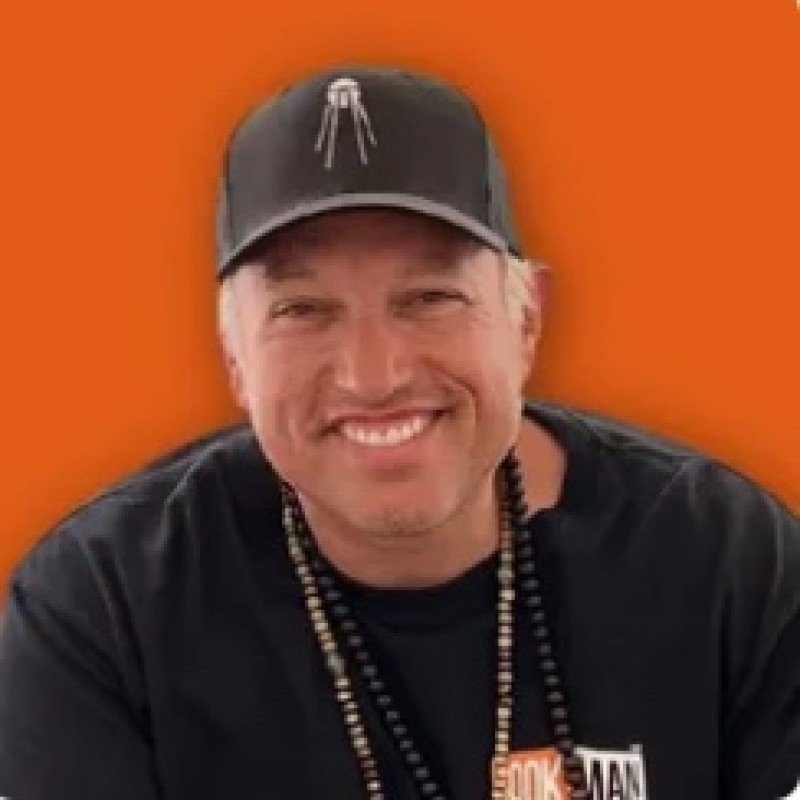
Co-Founder & Partner
Seth Yakatan is a corporate finance expert, institutional investor, and co-founder of Katan Associates.
View Guest Profile ↗
Corporate Finance & M&A Advisory Firm
Katan Associates is a corporate finance advisory and investment firm specializing in life sciences and regulated industries, including the US...
Learn More About Partner ↗Katan Associates is an international corporate finance advisory firm co-founded by Seth Yakatan, specializing in capital raising, mergers and acquisitions (M&A), and corporate strategy for regulated life sciences and cannabis companies.
Health Canada tested 100 samples and found that 94% of illicit market products contained three or more agricultural pesticides, compared to regulated market products which passed strict residue limits.
Federal classification of cannabis as a controlled substance prevents US public pension funds, venture capital, and major financial institutions from investing in the sector.