
New Episode
Short Summary
In this episode of the Legacies Podcast, host Tom Ritchie sits down with David Côté, CEO of J-Supply Co. and Northern Helm. Côté shares his extensive background in consumer packaged goods (CPG) and corporate retail operations, including managing client M&A integrations at Accenture, overseeing field operations at Tim Hortons USA, and designing retail workflows for Tokyo Smoke during the initial rollout of Canadian legalization in 2018.
Côté walks through the challenges of Ontario’s early retail lottery and licensing frameworks, highlighting the financial pressures of securing long-term leases prior to obtaining retail licenses from the AGCO. He analyzes the upcoming commercial lease cycle, noting that the expiry of initial five-year terms will trigger a consolidation wave and re-distribute store footprints to align with consumer demand. He explains how Northern Helm and J-Supply holdings leverage a licensing model that grants local operators autonomy over inventory and staffing while utilizing a centralized backend infrastructure.
In the second half, the discussion shifts to retail data analytics and human resource management. Côté describes how his companies utilize transaction-level analytics (partnering with firms like AMEEL) to track customer purchase habits and optimize retail assortments. He examines the factors behind budtender turnover, arguing that retention is driven by structured career development, continuous on-the-job training, and transparent pathways for internal promotion rather than wages alone. Finally, he outlines the operational lessons learned from retail M&A and highlights the industry’s progression toward CPG-level maturity.
Tom Ritchie Says: Welcome to Legacies, everyone! Legacies is powered by AVEO vapor devices, leaders in sustainable vape technology. I’m joined this week by David Côté of Northern Helm and J Supply Co. David, how are you doing, man?
David Côté Says: I’m so happy to be here. Thank you for having me on, Tom!
Tom Ritchie Says: It’s a blast to have you on. We run in similar circles, and you’ve been in this space since early 2018 starting with Tokyo Smoke. You’re a seasoned leader when it comes to consumer packaged goods (CPG) and retail operations. The industry can be tough on operators who try to figure out retail on the fly. Outside of government distributors, retailers hold tremendous gatekeeper power—brands can do all the marketing they want, but retailers make or break a brand based on what gets placed on shelves. How do you look at that dynamic?
David Côté Says: At the end of the day, retail is retail. Whether you’re selling coffee, Ziploc containers, or cannabis, the product, the sales reps, and the merchandising all have to fit what the target consumer is looking for. In cannabis, there’s been a massive learning curve as consumers discover what they want, and as producers figure out what can actually be manufactured consistently post-prohibition.
David Côté Says: My entire career has been in retail. Early on, I was selling Ziploc containers to Loblaws, learning how retail negotiations work and discovering that grocery suppliers pay substantial data fees for category scan data. Those who buy and analyze data make far better decisions for their customers.
David Côté Says: From there, I worked at Accenture Strategy focusing on retail post-M&A integrations—looking at how merged CPG companies could align their branded customer touchpoints while standardizing back-end finance and supply chain. Then I joined Restaurant Brands International (RBI) in operations for Tim Hortons USA in the central US, learning the intricacies of large-scale franchising. By 2017, with cannabis legalization approaching, I wanted to apply mainstream retail disciplines to this emerging space.
Tom Ritchie Says: What brought you to Tokyo Smoke in early 2018?
David Côté Says: My undergraduate classmate Aaron Sals introduced me to Alan Gertner and Brian Lowe at Tokyo Smoke. Sitting down with them was like turning on a light bulb. They were thinking years beyond legalization—how to translate their boutique coffee cafes into elevated cannabis retail experiences. They were assembling an exceptional team from UBS, Harvard Business School, and Google—people leaving lucrative corporate careers to build something historic.
David Côté Says: I joined Tokyo Smoke in early 2018 to build retail operations. At the time, Ontario was under the Wynne government with plans for a government-run LCBO model. We focused on maintaining our cafes, developing the DOJA brand in Kelowna, and preparing our Manitoba stores. We opened our first two stores in Manitoba on legalization day—October 17, 2018—offering same-day delivery right from day one.
David Côté Says: While opening Manitoba, the Ford government took office in Ontario and announced that licensed producers would be barred from owning retail stores directly. Right around that time, Canopy Growth acquired Tokyo Smoke. I looked at the new rules and realized Ontario would have to operate on a franchise model.
David Côté Says: We partnered with the Katz Group (now OEG) for Tokyo Smoke in Ontario, and Tweed partnered with Alimentation Couche-Tard (Circle K). I transitioned over to build the back-end operating model for those franchise systems. Working with Couche-Tard was an eye-opener. The province initially proposed allowing 75 stores per retail operator. We asked the Couche-Tard team to provide their top 75 locations in Ontario, expecting it would take them two hours. Fifteen minutes later, they delivered 75 fully vetted sites ranked across twelve analytical criteria. A company with 16,000 retail locations operates with unmatched real estate discipline because retail is retail.
David Côté Says: We were sitting in a law firm boardroom when the provincial government suddenly scrapped the open market and announced the retail lottery. Tokyo Smoke was sitting on 37 executed commercial leases that were instantly frozen. That period was pure chaos across the industry.
Tom Ritchie Says: Is cannabis truly CPG yet, or are we still pretending?
David Côté Says: Cannabis will be CPG when it reaches maturity. That means deeply understanding customer segments, establishing robust supply chains, collaborating constructively with regulators, and freely exchanging executive talent with mainstream consumer goods. In 2019, talent flooded into cannabis from private equity, banking, and CPG. Today, a lot of talent has exited during the downturn. Once the market stabilizes at a sustainable equilibrium, cannabis will operate as true CPG.
David Côté Says: When alcohol prohibition ended in the United States, the top-selling products were high-proof moonshines and cheap whiskeys because they were easiest to produce and transport. Fifteen years later, after multiple iterations of product development, the top sellers were Budweiser and Coors at 5% ABV. In Canadian cannabis, we are only six years into adult-use and barely five years into concentrates and 2.0 products. Product refinement takes time.
David Côté Says: Even as mass-market brands consolidate, the craft category remains vital. In beer, coffee, or functional beverages, craft producers drive innovation. Big CPG giants acquire indie brands because large corporate labs cannot replicate the R&D passion of an entrepreneur filling a niche they genuinely love.
Tom Ritchie Says: Why did Ontario end up with rows of cannabis dispensaries lined up right next to each other on streets like Queen Street in Toronto?
David Côté Says: It stemmed from the AGCO application process. In the early post-lottery roll-out, an applicant had to secure a commercial lease, complete physical renovations, build a secure vault, and take financial possession of the space before appearing on the AGCO public notice registry. Two retailers could sign leases next door to each other with different landlords and have no idea until their applications were published simultaneously.
David Côté Says: Once you’ve invested hundreds of thousands of dollars and signed personal lease guarantees, you don’t walk away—you open your doors and compete. However, many five-year leases signed in 2019 and 2020 are reaching expiration late this year and early next year. As these leases expire, stores will naturally relocate from oversaturated clusters into high-traffic plazas, underserved suburbs, and municipalities like Mississauga that initially opted out. The retail footprint will finally realign with consumer demand.
Tom Ritchie Says: How did you define the customer demographic when designing Northern Helm?
David Côté Says: In 2020, most cannabis retailers targeted the mid-20s male consumer, while Tokyo Smoke catered to high-end urban professionals. When creating Northern Helm, I looked at what Loblaws does better than anyone. When I worked on the Loblaws account at age 22, they knew their primary customer intimately: a 35-year-old suburban mom who drives a Subaru, has two kids, exercises regularly, and enjoys wine on weekends. Their marketing speaks directly to her, yet their stores are comfortable for college students and seniors alike.
David Côté Says: We designed Northern Helm with the aesthetic warmth of a specialty grocery store or neighborhood cafe. It speaks to our target demographic without alienating the 25-year-old legacy consumer or the 65-year-old grandparent seeking CBD. Designing a retail space that stands the test of time requires welcoming all consumer segments.
Tom Ritchie Says: How do you navigate the squeeze between massive retail roll-ups and agile independent operators?
David Côté Says: In mature retail, the top four players control up to 90% of the market, while independents hold 10%. With Northern Helm, we launched a licensee model that gives local owner-operators operational autonomy over their product menus and staff. A local operator in Bowmanville or Oshawa understands their community far better than a corporate head office in Toronto ever will.
David Côté Says: To eliminate redundant overhead during COVID-19 construction delays, we partnered with Nick and Christos at J Supply Co., merging our back-end infrastructure under J-Supply Holdings. We divested distant stores in Thunder Bay to focus on Southern Ontario, and we are now selectively buying back high-performing stores from licensees who are ready to exit. As a mid-sized operator, flexibility is essential to survive.
Tom Ritchie Says: What are the biggest operational lessons you’ve learned from cannabis M&A?
David Côté Says: M&A is never as fast as you expect, and it can be a massive distraction from running your core business. If an opportunity doesn’t fit, say no immediately. We’ve seen numerous deals announced for stock promotion that collapsed once parties entered the data room. In business school, they teach you that everything fits neatly into a spreadsheet, but real-world M&A comes down to operational integration. Once a deal closes, success depends entirely on post-merger execution.
Tom Ritchie Says: How do you maintain operational consistency across retail banners?
David Côté Says: Our operations leader Jeff reviews store performance daily. We work with a dedicated third-party analytics team to analyze weekly transaction-level basket data, tracking customer visit recency and purchasing behaviors through Alpine IQ. Retraining is continuous—giving frontline staff clear promotional tools and removing administrative distractions so they can focus entirely on customer service.
Tom Ritchie Says: Budtender turnover across the industry is notoriously high. How does Northern Helm maintain strong employee retention?
David Côté Says: It goes beyond hourly wages. When staff understand their career advancement pathway, retention improves dramatically. We conduct formal quarterly reviews, establish transparent criteria for promotions, offer team performance incentives, and provide employee product discounts. When team members feel valued, connected, and safe, they build long-term careers.
Tom Ritchie Says: Northern Helm carries roughly 650 SKUs per store. How do you ensure budtenders are knowledgeable across such an extensive catalog?
David Côté Says: Staff longevity is our biggest advantage. A budtender who has been with us for two years naturally knows several hundred products. For new arrivals, our internal intranet provides video product knowledge (PK) modules and detailed SOPs. When regulators survey consumers, quality is always the top purchase driver, but consumers define quality through brand trust and budtender recommendations. Brands like 1964 earned credibility because budtenders sampled the flower, loved it, and enthusiastically recommended it to shoppers.
Tom Ritchie Says: What advice do you have for craft producers trying to secure retail placement?
David Côté Says: Look at what Grant did with White Label—he got in his car, drove across Ontario, and personally visited 150 stores with samples of his hero product. Or look at Peter from Purple Hills, who jumped on webcam sessions with our retail staff to demonstrate how they process live concentrates. Engaging frontline budtenders directly builds authentic excitement. If the floor team isn’t excited about a product, it will sit on the shelf, and if it sits on the shelf, it won’t get reordered.
Tom Ritchie Says: What does the future look like between digital e-commerce and brick-and-mortar stores?
David Côté Says: Well over 50% of consumers check our Dutchie menus online before entering our stores. Whether ordering delivery through Uber Eats in Toronto or walking into our Durham stores, the experience must be seamless. The physical menus, digital menus, and budtender knowledge must be completely aligned. Physical retail will always remain essential, but e-commerce and delivery must work in harmony with the store.
Tom Ritchie Says: How do you build genuine customer loyalty in a market where shoppers frequently hunt for bargains?
David Côté Says: Retail loyalty is about becoming part of the consumer’s weekly routine. Digital loyalty platforms are expensive to launch, and in a stigmatized category, consumers are hesitant to hand over personal contact information on day one. When launching the Tim Hortons app in the US, stores that used physical punch cards saw much faster digital app adoption because customers already understood the reward habit.
David Côté Says: At Northern Helm, we used physical punch cards for years. That allowed us to earn customer trust face-to-face while building an opted-in POS customer database of thousands of shoppers. Now, as we transition our stores to digital loyalty platforms, our customers already trust us not to spam them. We walked before we ran.
Tom Ritchie Says: David, what wisdom would you like to leave with the cannabis community?
David Côté Says: We need to keep driving toward being recognized as a mature CPG industry, while always honoring and remembering the legacy pioneers who fought the battles that made this conversation possible in the first place.
Tom Ritchie Says: Beautifully said. David, thank you for your leadership and for joining us on Legacies!
David Côté Says: Thank you, Tom! Keep pushing the industry forward.
Jump to 01:28
Jump to 04:12
Jump to 03:35
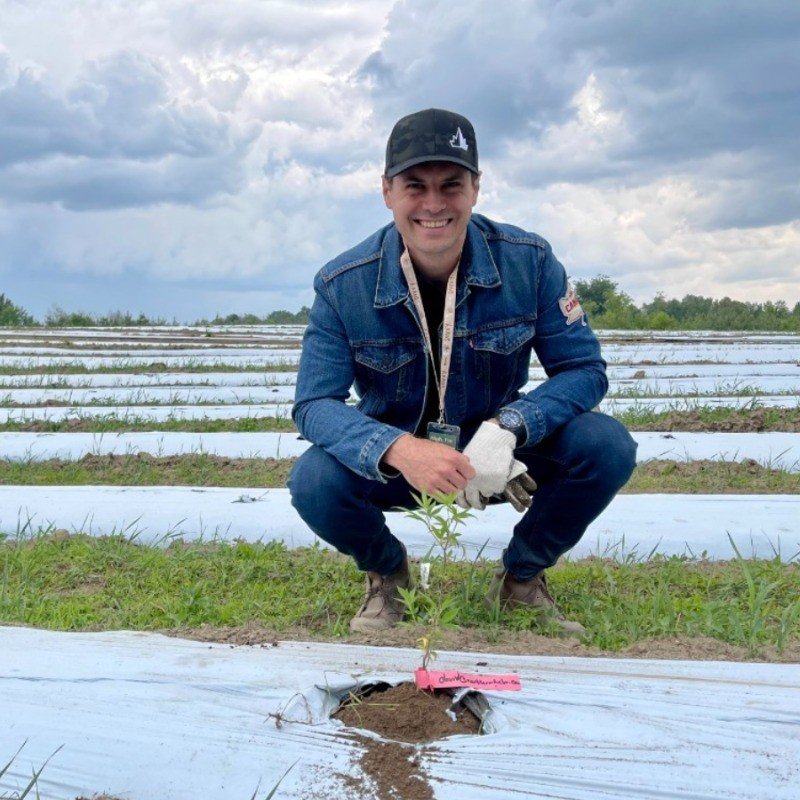
CEO
David Côté is the CEO of J-Supply Co. and Northern Helm. He is a retail and CPG veteran with experience at Tokyo Smoke and Tim Hortons.
View Guest Profile ↗
Cannabis Retail Store Brand
Northern Helm is an adult-use cannabis retail brand operating in Ontario, Canada. Founded in 2021 by David Côté, the company...
Learn More About Partner ↗Unlike highly standardized franchise operations, Northern Helm's model grants local licensees greater autonomy to customize product menus, select local inventory, and manage storefront teams, while the corporate entity provides backend support in finance, compliance, and data analytics.
Many retail stores signed initial five-year commercial leases during the post-lottery rush of 2019–2020. As these terms expire, unprofitable stores will close, leading to market consolidation and a redistribution of storefronts to areas with stronger customer demand.
While competitive wages are important, David Côté emphasizes that lowering retail staff turnover requires structured employee onboarding, continuous retraining programs, clear communication of performance standards, and visible pathways for internal career progression.