
New Episode
Short Summary
In Episode 72 of the Legacies Podcast, host Tom Ritchie sits down with JP Donahue, founder of the creative consultancy Stoned Ape and co-founder of California’s Tropicanna Dispensary. JP pulls back the curtain on the true definition of a “brand” in the legal cannabis space, showing why a logo is merely a flag, not the ship itself. He details how a cohesive brand serves as an operator’s only defense against price compression, turning a commodity crop into a premium experience that commands margin. JP explains his proprietary “Superhero Questions” framework—adapted from his Hollywood screenwriting career—to help founders define their unique voice. They explore the critical flaws of running customer acquisition and retention in silos, and emphasize that operational details like clean bathrooms, sweeps, security guard attitudes, and packaging integrity are just as vital to a brand’s promise as digital marketing.
Tom Ritchie Says: All right, we are live, sir. JP Donahue, I finally got you.
JP Donahue Says: You do have me, man. I’m all yours, 100%.
Tom Ritchie Says: Finally got you, brother. I’ll try not to make this entire live about jiu-jitsu. God, I love it. Well, I caught your post a while back, and I think we had connected previously and back and forth a little bit. Then I saw that you were exiting that scene a little bit. It’s hard on the body for a while, but then the last time we connected, you’re getting back into it.
JP Donahue Says: Yeah, you know, since my surgery, it’s been a really challenging path to navigate.
Tom Ritchie Says: Yeah, I bet. I bet.
JP Donahue Says: But I’m doing great.
Tom Ritchie Says: That’s awesome.
JP Donahue Says: You know, and it’s just another opportunity to learn and grow and test boundaries. Things that used to work for me don’t work for me now, and there’s so much growth in that. It’s a beautiful part of life, a beautiful part of aging, actually. Most people push against it, but it’s just a fact of our existence.
Tom Ritchie Says: Yeah. Well, and that’s, I think, you know, I joked and said I’m crazy enough to get started late in life. It took, what was I, 49 when I started? 49, joining my son, right? I’m getting some stripes, baby. But it’s funny, because literally just before going live here, I came back from the chiropractor. I had a rib out.
JP Donahue Says: Oh jeez, that’s painful, man.
Tom Ritchie Says: Oh, it sucks.
JP Donahue Says: Yeah, well, I mean, you know what it’s like getting stacked and something goes out. I pulled one out escaping side control with a wrestler 12 years ago and it healed outside of the cartilage, so I have a permanent knob here on my right-hand side, right above the floater, that nobody cares about. [laughs]
Tom Ritchie Says: Well, and it’s funny, I look at this industry a bit like jiu-jitsu now.
JP Donahue Says: Sure. [laughs]
Tom Ritchie Says: Because there’s so much ebb and flow, and you have to watch your positioning in a lot of places. I’ve been in the industry quite some time, and I want to get into where you landed in the industry and how you built what was going on. But I just see so much, JP.
There’s almost all this talking in circles going on right now, and every once in a while I see a post, either it’s you or Mitchell or someone else, and I’m an advertising guy, right? I’m an ad dude. Like, I’m an old ad guy. I just look at this as brand. Brand. I’m like, okay, I love what you have done with building a super brand. The Superhero Questions.
It simplifies it so much. And I think that’s what so many are missing in this industry. And this happens not even just in cannabis. I’m going to start a company: first thing, they design a logo, then a tagline, and then all of a sudden there’s no business plan going on behind it. And I’m like, why? Where’s the copy? What’s your ethos? What’s your origin story?
What are you writing on your website? Why you? It goes on and on and on, and it all needs to connect. It needs to connect, right?
JP Donahue Says: I mean, you’re right, though. I just want to make this point, and I have a story around this, but I’ll keep this one short, in terms of the need to simplify. I just sat in so many meetings as CMO of Deep Roots Partnership with dispensaries and brands that could not even articulate brand. They just didn’t have the language. It’s not their fault. It’s a complicated thing.
And then go to the experts. Go to Seth Godin. No one can understand what Seth Godin is saying except me and maybe you.
Tom Ritchie Says: I’m still hung up on the purple cow, so it doesn’t help.
JP Donahue Says: And then even people saying, well, you think of your ideal customer and you work backwards. That doesn’t really work either. That’s not going to get you to copy that people fall in love with on your website. So it really was like I was in this position of abject frustration without being able to have a meaningful dialogue about any of this.
And I went back to my career in Hollywood and I was like, ah, superheroes. Common language. Simple. Easy. Everybody gets it. How can I break this down? And I’m just riding that horse hard now.
Tom Ritchie Says: Well, it makes sense, though. And I think that’s the thing: branding, marketing, understanding your true value of what you’re putting into industry, any industry. It’s a concept that so many just kind of forget, not realizing that’s how your consumers will connect with you ultimately, right? So you’re talking Hollywood, you’re talking superhero movies. We connect to superheroes for a plethora of different reasons.
And in the case of Stoned Ape and the work that you’re doing, man, I just love reading those. I love that you’re taking a classic case and applying the Superhero Questions to them, because again, it’s simplified. It’s complex, but it’s simplified, and I think many miss that.
But first, let me go back, because for those that are unfamiliar with your work and what you’re doing, they see you throughout the internets on LinkedIn, commenting and putting forward some good information, and you’re consulting now. But prior to that there was Trop, or Tropicanna. What was your foray into the industry, and what kind of successes did you see building that brand out? And then we’ll move into what came next, and then Stoned Ape.
JP Donahue Says: Yeah. I mean, I was a screenwriter for a long time. I was a lawyer before that. Probably nobody wants to hear about either of those things. [laughs] I reached a point where I decided to quit writing, and Prop 215 was the law of the land. And I’d been a cultivator as a kid in rural Michigan. I just decided that was the next thing for me.
I had a passion for it, and I really had a need to make something tangible after just writing for 15 years. My last project, I was retrofitting scrap double-wide trailers on a five-acre property I bought in the middle of the Mojave Desert into mobile automated greenhouses.
Tom Ritchie Says: Wow.
JP Donahue Says: And then San Bernardino County changed their laws. They declared you could not aggregate recs there anymore. Anything over six plants was a felony. I had four 1,600-square-foot greenhouses on that property that were lit up like the North Star at night, and all of a sudden I was getting flyovers by CHP and everything else. So I pulled the plug.
And I had a friend, a business associate, who was on the waiting list in Santa Ana for retail, and when they went Prop 64, they accepted new applications. I’m also a lawyer, you know, so I drafted the merit-based application for that shop.
And really, obviously Hollywood’s a lot about brand, so I’m not saying this is the first time I thought about brand, but there was a moment when we were under construction where I was sitting on a dirt pile looking at a six-foot hole in the ground. Didn’t have a name. We had no idea what we were doing.
And this question hit me: why should someone shop at your dispensary? Why should somebody choose you over all the other choices in the space? Over all the other retails, over the illicit market, over the deliveries, over the illicit deliveries. I mean, now we have hemp too, whether that stays or goes, who knows. But you have to have a compelling reason, and that reason is your brand.
And that was the birth of Tropicanna. That was my idea. And I was zagging while everyone was zigging. Everyone was medical still. Green crosses, waiting rooms, talking about health and wellness. I built a Miami Beach day club in the middle of Santa Ana. I painted it Miami seafoam green and pink. The flamingo was our logo. And we made cannabis fun. That place was a blast.
We threw parties all the time. We went off on 710, we went off on 420, did tons of brand-sponsored events. It was the spot, and nobody was doing that then. And the reality of it is, I think we had a lot of influence in changing the dispensary game. So that was where it started with brand. I feel like I’ve talked for way too long.
Tom Ritchie Says: No, no, no. The story’s good, and I think that’s what some need to understand. I work with retailers a little bit as well. I’m a growth partner with a company that supports retailers, and I have a lot of conversations with different retailers. There’s a contrast between what’s allowed, how operations work, and how the brands are built in Canada versus the US versus the rest of the world.
In Canada we’re very much in lockdown. You cannot promote, for the most part. But once you’ve got customers, this is where I see a lot of, at least in Canada, the retailers failing, and I have seen it in the US: you get their info. You can now market to them legally in Canada.
And I’ve said this before multiple times, I sign up for every dispensary I can, because I want to see what your marketing looks like. What are you spending?
JP Donahue Says: I need to do that, man.
Tom Ritchie Says: But listen, out of, JP, probably 30-plus different dispensaries, big and small, I don’t receive anything for the most part. There’s a couple that do it really, really well, and twice a week I get a beautiful email on what’s going on, pumping the products, working with brands. But outside of that, I don’t see much.
JP Donahue Says: You’re talking about the Alpine IQ or whatever systems they’re using.
Tom Ritchie Says: Yeah, whatever they’re using. But I think, you know, SMS, okay, I get it’s on lockdown and there’s struggles. I worked US-side as well for a while. But when you’ve got an email address, you have something. You have something at least.
JP Donahue Says: It’s gold. Your list is gold. But I’ll also say this, because people forget about this and this is really important. You can have limitations on marketing and how you can communicate, but you can have a website, right?
Tom Ritchie Says: Right. Yes.
JP Donahue Says: And your website has an attitude and a tone and a style and a brand that should be evocative of what you’re doing in store. And we really did that with Tropicanna.
JP Donahue Says: But then another aspect of brand that people don’t talk about enough is operations. What kind of experience? What kind of attitude? What does your store feel like when you walk in the door? Does it feel like a trip to the dentist’s office? Because I’ll tell you this: when I opened my shop, every shop in Orange County felt like a trip to the dentist’s office. It sucked.
The guard would grind you on the entrance, and then they’d sit you in this awkward waiting room with a bunch of different people, and you’d wait to get called to go in the store, and rec had already passed. Nobody transitioned. This is insane. So you can go a long way with your brand and getting return business by the experience you provide the customer in your store.
And the menu, which is part of your brand. And the customer service, which is part of your brand. And how welcoming are you when they come in? Does your guard smile at them, or is he mad-dogging everyone? It just goes on and on. Are the bathrooms clean? Is the floor swept? Are the lights on? Is the line orderly?
Are the displays… you get into this whole thing, and that’s all part of your brand too. And I always say, you can say whatever you want online, but if you can’t deliver on the promise in store, you’re dead. No one’s coming back.
Tom Ritchie Says: Yeah. Well, I’ve seen that. A brand goes all the way into emptying your trash. Man, that’s such a strong point to make, that the customer experience, both online digital format and in person, they have to jive. I’ve seen this beautiful website. Incredible. I’m like, I’m going to visit that place when I get to town. I get in and I’m like, what is this garbage?
Like, what is this? But I’m just thinking the whole time, I’m not a big Starbucks guy, but I’m thinking Dunkin’ Donuts versus a Starbucks. They both serve coffee, both have some fancy drinks, but one is willing to pay more to go to a Starbucks in some cases because of that experience.
The way they’ve greeted you, what it looks like, the aesthetics in the store, versus coffee slung here and everything all over the place.
JP Donahue Says: Their app is a killer.
Tom Ritchie Says: Yeah. Well, again, it’s experience. And then how am I rewarding? But I mean, it’s like the wild wild west going on with different dispensaries.
Tom Ritchie Says: Let me put it this way. If I’m coming to you, because you consult with individuals that are moving into retail especially, I’m coming to you with an idea. I’m going to launch in, I’ll just say, a newly regulated state that they’ve just opened up. What is step one? What does that look like? I haven’t even thought of my brand yet. I’ve got capital. I’m going to make a go of this. What is step one?
JP Donahue Says: I think step one is just a real basic get-to-know-you discovery call before anything. Especially for me, I’m very, very careful now about who I work with and what projects I want to be involved in. Thankfully, I’m in a position where I have the luxury to pick and choose, and I don’t have to do anything I don’t want to.
So the first step for me is seeing if there’s synergy between me and the potential client, seeing if they understand brand, and getting a feel for what their ideas are. But if we can cross that bridge and we both feel good about it, the Superhero Questions for me really are the next step. And I ask clients to do them on their own. I give them to clients for free. You can see I publish them all.
Tom Ritchie Says: Oh yeah, they’re all out there.
JP Donahue Says: I try to keep them a secret. [laughs] If you want to take them and use them yourself, take them and use them yourself. And if it makes you better, marvelous. But what usually happens is they do them, and then they submit them to me, and I have a bunch of notes or suggestions, and I end up working on them with them to refine the answers.
Because I’ve walked down this road before, and I know how these answers are going to manifest themselves in their marketing throughout the marketing cycle of the business, and by the way, by extension, also in retention. And this is one of the things that drives me crazy right now too. This is another cause of mine.
I cannot believe that so many dispensaries run acquisition and retention as siloed solutions. And I cannot believe all the retention people that publish ROI that doesn’t factor in cost of acquisition. Because without acquisition, there’s nothing to retain, right? These things need to work in synergy, with brand as a flow-through, and almost no one’s doing that.
Agencies have a different SEO or acquisition entity than they do retention entity, and they’re not synced, and therefore their marketing numbers are false and their retention numbers are false, and they don’t really know what’s going on, and brand is missing from all of it. There’s no unified effort there.
So I start with the Superhero Questions, because the truth of the matter is, it forces you to answer the question that needs to be answered: why should anyone fall in love with you? What is special about you? Again, the question I had when I was sitting on that pile of dirt. That was the beginning of all of this.
We had investors, and we didn’t know if we were going to succeed or fail, and there were 20 shops open in Orange County for four years before we even got there. So we had to take market share from people to be successful. It was not a level playing field. And honestly, we were terrified. How are we going to do this? We’re both cultivators, on top of it.
Yeah, I’m a lawyer and I was a screenwriter and I have some other experience, but I never opened a dispensary before. I’d never done retail before. But I did know this: I needed to answer the question, why should somebody pick you? And I’m a world-class creative, so I’m the right guy to answer that question.
Tom Ritchie Says: Yeah, well, I would hope, right? That makes sense.
JP Donahue Says: So I got lucky there. Thank goodness I asked it. Anyway, that’s where I would start with a new person. Let’s look at the Superhero Questions and let’s figure this out.
Tom Ritchie Says: Do you have a disclaimer at the bottom of it that says do not use ChatGPT to answer these questions?
JP Donahue Says: Oh, no. I’d love it if they use ChatGPT to answer the questions, because it’s just going to come out in the wash. It’s so interesting. I don’t know why, and this was part of my frustration when I was consulting with the digital agency: people will drop a ten or twenty thousand dollar check on acquisition and retention, and they won’t even have a conversation about brand.
And so if somebody answers those questions with ChatGPT, they’re really doing us both a great service, because it tells me they don’t understand brand. They’re not taking brand seriously. And that probably means they’re not going to be successful, unless we have the come-to-Jesus talk when I get their ChatGPT answers and I explain that to them. They’re like, oh, now I get it.
But at least, you know, those things are great when they happen. Either they make it succeed or they make it fail; either way you win. Because if ChatGPT is their branding solution and they don’t want to change their mind about that, then you shouldn’t touch that with a ten-foot pole.
Tom Ritchie Says: Right, right. How do you differentiate now, though? I guess it would be different state to state and depending on what competition looks like. So let’s say I’m working with you and I’ve got this solid idea, but it’s also somewhat already replicated in market, maybe within a certain neighborhood or a demographic. Is there danger in that, where you align similar to what’s already happening? Does that create pricing wars and the race to the bottom? I’m just curious about that situation.
JP Donahue Says: Well, I always view brand as the only protection on price point. If you’re just a liquor store or a gas station, then you’re selling commodities and you’re in the price war zone. So brand for me… I always say people don’t come to dispensaries to buy weed, and that’s not why I wanted anyone to come to my dispensary. I wanted them to come for the experience.
But there are all different kinds of experiences. Also, dispensaries are hyper-local, especially if you’re in a saturated market. Unfortunately, most cities have really restrictive zoning when they open for shops, and they cluster shops in different industrial areas. So the odds are, wherever you are, there’s going to be at least three or four people pretty close on top of you.
If I was coming into one of those locations, I would definitely not replicate what anyone else is doing in the neighborhood. And I’m not really a fan of replication anyway. I much prefer original thinking. My idea for Tropicanna, which is basically making cannabis fun again, there are all different kinds of ways to do that. And there are all kinds of different brands.
There’s happy cannabis, or cannabis with a smile. I did some consulting for a Jersey brand called Frosted Nug, and part of their brand identity was fun, and it sort of crossed over into the Tropicanna zone, but they were hyper-focused on boutique flower from local New Jersey growers and not serving up the MSO mids. That’s a great distinguishing feature.
And then that starts to walk you into educated budtenders and the ability to talk about it. So you’ve got fun, but it’s crossing over into this area, which is a way to distinguish it slightly from what other people have done.
JP Donahue Says: It really is, with all the different brands I’ve worked with… creativity is a process of discovery. And I like to say there’s a secret mathematical equation. It’s called ass plus chair. You get a project and you have a bunch of raw ideas, and you sit your ass in the chair, and the muse comes during the act of creation, not before it.
And every single time I’m involved in a branding project, which might lead to a marketing project, which might lead to a retention project, I’m in the mix and I’m sitting there with answers to Superhero Questions or a conversation, and I’m in front of my computer, or my pad and paper, because a lot of times I just start freewriting with a pad and paper.
I can write as fast as I can think. I can’t type that fast, so I get a little bit more authentic flow. But things just start to happen. Ideas. I’m a creative. That’s the magic of writing. That’s the magic of being an artist.
Tom Ritchie Says: You’re bringing me back to my ad school days.
JP Donahue Says: But ideas just start to happen, and you don’t even really have control over them. It’s the thing I love more than anything on earth: the magic of ideas entering my mind, with just sitting in the chair and doing the work. It’s a form of magic. It’s a form of alchemy.
And that’s how I do what I do with brands, and it’s actually, honestly, why I do what I do. One of the best moves I made was exiting my dispensary. Even though it was really hard, and I was sick, I was recovering from open-heart surgery when I did it, and I was lost for a while after I did it.
I’m not built to sit in the back room of a store and manage it. That’s not what I’m here for. At all. Not even. That’s like slow death to me. Now I’m just free-range creative, living on the beach in Costa Rica. It couldn’t be more beautiful.
Tom Ritchie Says: Well, I think that’s part of the hard part with creatives especially. I worked both streams, right? I worked on the creative side and on the business side. And you talking about that ass and chair, I think it was my first-year copywriting professor. He’s like, you’re going to sit down and you’re going to come up with a minimum hundred word associations. Minimum. We’re going to start the timer.
And you write down all these word associations, all these word associations. And he goes, great, everyone done? Yep, good. Now throw it in the garbage. Now we’re going to start. [laughs] Meanwhile, you’re like, what the hell? But it really changed the way you think about things.
In those days Starbucks was launching in Canada, so we did a lot of Starbucks work, just coming up with different word associations with coffee and the feel of it and what that looks like. But I could just imagine taking a creative individual like yourself and then locking them into what’s not you. So you must feel very fulfilled being able to work with new brands coming up.
JP Donahue Says: Every time I get a project, I’m excited. It’s fun and I love doing it, and I like to see people be successful. And I like to see the light come on.
JP Donahue Says: And here’s a little side note, something interesting that’s developing: I’ve branched into personal branding now. Superhero Questions. You ever heard someone say, when someone’s down and out or struggling, be the hero in your own movie? No one’s coming to save you. Save yourself. I’ve now tweaked these questions.
I have a couple of friends that have reached out to me, and I’ve tweaked these questions so they’re targeted towards the individual. Instead of engaging in a discovery of what the brand is, they’re engaging in a discovery of what they are, and they’re trying to find their inner superhero to pull themselves out of the situation they’re in.
Tom Ritchie Says: Dude, what perfect timing that could be for this industry especially. [laughs]
JP Donahue Says: Well, yeah. I think I’m going to do a book. Maybe called We Could Be Heroes, because I love that Bowie song and I always wanted to write a movie about it.
Tom Ritchie Says: That’s cool. I would say you should. I think that’s where some people struggle, though, JP. This is a hard industry. Even if you’ve got everything figured out, in the US you’re dealing with a ton of different issues. Are we going to reschedule, deschedule, are we going to legalize? You’ve got the hemp battle and all this going on.
MSO operations, what does that look like for us if we’re a brand, if we’re a retailer? I’ve spoken to a lot where they get on and I can just tell, I’ve been there: they’re defeated. It’s like, I don’t have any life left in me to give to this business anymore, but I have to.
And I think even those that are still operating, helping with those Superhero Questions and the work that you’re going to do, branching in, helping them just to re-enter, figure out who they are and why they’re doing it. What’s your purpose? Why are you still doing this?
JP Donahue Says: I’m so glad you brought this up, because I read a post this morning that was about decision fatigue. And this may seem a bit harsh…
Tom Ritchie Says: Legacy. Nothing’s harsh anymore. [laughs]
JP Donahue Says: This is how I see it. It’s only decision fatigue if you permit yourself to be stressed about thinking. And I’ll share something personal. Look, four years ago I had emergency open-heart surgery, and I held hands with death for about two years. I literally did not know if I was going to make it or not.
And there’s a lot of story I can tell around that, but I’ll leave it at this: guess what? You’re all going to die. So if you are stressed about your cannabis company, or making decisions, or how difficult this industry is, you are not thinking about it the right way. Life and work is play. No one wins. Everyone dies. Cut it out. If you fail, you fail.
So what? You know how many times I’ve failed in my life? Way more times than I’ve been successful. Way more. I’m still here. Talk to Michael Jordan. Talk to Kobe Bryant. Talk to them about how many game-winning shots they’ve actually missed.
If you cycle into this misery and difficulty: it’s the regulations’ fault, no, it’s the taxes’ fault, no, it’s hemp’s fault, no, it’s the illicit market’s fault… whatever. That’s going to be your experience. If you point the finger at you and you say, I’m 100% accountable, I have to own all this, none of it really matters at the end of the day.
Okay, I mean, it matters, but it doesn’t matter. I’m just going to show up every day. I’m going to give my best to whatever I can. I’m going to do what’s in front of me, and I’m going to accept the result. That’s the only attitude that makes any sense.
So I would say to someone who’s got decision fatigue or who’s melting down, I think they need to be sat in a chair and talked to. Look, the situation is not your enemy. The way you’re thinking about the situation is your enemy. And that’s what’s killing you, and that’s what’s taking all your energy. This little hamster wheel in your head that you can’t get off of.
And that’s a very Buddhist way of thinking about things. Part of my journey has been Buddhism. Part of it has been a bunch of ayahuasca ceremonies. A deep, deep, deep inward gaze that, in my mind, corrected a lot of that self-sabotage and cyclical thinking that makes everything feel like a chore instead of a joy. I don’t know how much time I have left, Tom. I’ll be honest. I almost died. I’ll tell you what: I’m not going to have a bad time.
Tom Ritchie Says: Yeah. Well, that’s it. That’s it, man. I’m not going to have a bad time. Period. Well, there’s a few things to that. If I were to put my old operations hat on, I’ve led large organizations, and I’ve had individuals, managers, come to me and say, I’m stressed out, there’s too many decisions to make. So bring this right to that. There’s too many decisions.
I’m like, well, why are you needing to make so many decisions? That was always my first question. You’re either not empowering yourself or others, or you’ve got too much on your plate that I can help with. So really trying to understand: why are you even making so many decisions? But I like to say control. Work on the things you can control.
In this industry, I can control when I get up, when I have my coffee, when I eat, when I log onto social, how a post may affect me. I can control all those things.
JP Donahue Says: How much sleep you get, what’s your diet, are you hydrated, do you get to the gym? Those four things are going to have more to do with your health and wellness and your mindset than anything. And how many people are doing that? “But I’ve got too much work to do. There’s too much work to do.” The Buddhists have an interesting saying: if you don’t have five minutes to meditate, meditate for an hour.
Tom Ritchie Says: Yeah, well, it makes sense. And it’s funny you’re mentioning that. Not to get into the philosophical side of things, but I love having these types of conversations. I broke my cardinal rule this morning. For the last two years, I do not touch social. I will not look at emails. I wake up, I read the Tao Te Ching every single morning, spend time meditating.
I drink water and hydrate as much as I can. Then about an hour later, I’ll look at some emails, I’ll see what’s going on on social potentially. But I definitely stay away from those. Until this morning. I woke up, I saw there was an email notification popped up. I’m like, I’ll click on it. And I’m reading it.
It’s not disturbing me, but I’m like, what am I doing? Why am I looking at this email right now?
JP Donahue Says: Reflexive, huh?
Tom Ritchie Says: It is. And I think, oh, there’s a notification. We live by this world of notifications. I’ve given the advice, I’m sure you have as well: so many… I’ve even taken a little bit of a step back from LinkedIn for a while. One, because I see a lot of the same conversations happening, but two, it can get overwhelming. There’s the negativity.
This is something I’m sure you’re very familiar with. That spreads. If I were to post something negative or come down hard on regulators, or industry groups that aren’t moving the needle on something, people love that stuff. Oh, they love it. They want to jump in and commiserate with me. And no, I almost refuse to do that anymore.
But that’s what’s going to get you the likes and the follows, and I’ve never wanted to chase that. So for some, I give the advice of, listen: how much time are you spending on social? How much time are you spending on LinkedIn? You’re seeing too much negativity about the industry. Remember when you’re working in your shop, when you’ve got customers coming in and they’re happy?
They’re excited about their purchases. You’ve got something planned. It’s the holiday season, food drives, all these positive things that you can be using as a lever potentially, but also just feeling good about. They forget about that stuff, JP, and I don’t know why. I think they get into this vicious circle.
JP Donahue Says: We love it. Our brains are hardwired to run to the thing that attracts our attention, and unfortunately, that’s always negative information. I’m very structured in how I approach LinkedIn. I have a library, and I have buckets of content, three different buckets. But at the top of my content library are the words: always positive. Because I found myself a few times wading into conversations where I disagree.
And not to be a dick or prove I’m right. I just feel like, you know what, what this person’s saying, I’m not on board with, and maybe it begs for an alternate point of view. But I try to do that really sparingly now. For a little while I played into the cynicism game, but I don’t do it at all anymore.
I’m really focused on my brand now, Stoned Ape, Awareness Evolved, and what that is and what that means. And it goes deeper, much, much deeper for me. It’s a personal ethos. It’s not just a branding agency. It’s a way that I live my life. And it really is always positive. Always positive. Always positive. Anything else is just self-sabotage. It’s just not acceptable.
Tom Ritchie Says: Well, we have a limited number of days and hours and time on this earth. But I get it. We get caught up in it.
JP Donahue Says: Look, it’s easy. It’s easy to get caught. We’re wired to get caught. You have a morning practice to center yourself. I have a morning practice to center myself. I meditate and I read, and I also do morning pages. And I do that before I do anything else. And I actually take my dog out.
We go to the beach, we watch the sunrise, we swim, we ride on the beach. She pulls the bike for a while, because she’s a paddle dog and she needs to get a hammer. My morning routine probably takes an hour and a half to two hours, and I don’t give a damn. I do it every day. And I do it again at night. I haven’t missed a sunrise or a sunset in I don’t know how many years.
Tom Ritchie Says: That’s awesome. That’s awesome. And it’s super important. The reason I’m asking about this and getting you to share this, JP, is I want people to understand what they’re getting into working with you. Because it’s beyond what you see with building a super brand using Superhero Questions, the work that you’ve done in industry and the successes you’ve seen. It’s more centered.
Forget about all the big flashy for a second. Let’s really focus in on what your brand is going to be, what your story is going to be, what you are going to communicate to your customers. But you, as that individual working with them… I like to say that certain practices rub off.
So if you’re feeling grounded and centered and I’m working with you, chances are that’s going to rub off on me a little bit. And God knows everyone needs that in this industry right now. Rooted, grounded, centered. Don’t worry about the noise for a little while. Focus on, again, what you can control. That’s why I wanted to talk and why I pulled on those strings a little bit.
Because what we see in a lot of cases, we make these presumptions or decisions ahead of even having a conversation. What you post makes a lot of sense, but they don’t necessarily know who is JP at the root of it. That’s why I wanted to be able to talk to you, so people could understand: this is what you’re getting when you work with an individual like yourself.
JP Donahue Says: You know, my appearance can be pretty deceptive, because I look like, I don’t know, a cement truck driver. I get that from guys in jiu-jitsu. When I first started training, they’re like, what do you do for a living? I’m like, oh, I’m a writer. I’m an artist. They’re like, you’re not an artist. You’re a construction worker. You’re a collector for the mafia. No, I’m a sensitive soul.
[laughs] But really: boy, if you can be the light wherever you go, in everything you do, in every touchpoint in your life, bring the light. Because there’s so much suffering out there, and so much struggling, and the human experience is hard.
Most people haven’t had the benefit of facing their own death or going through the gauntlets that I’ve gone through in my life that have motivated me to evolve beyond sort of a standard operating system. I’m acutely aware of all the pain and all the suffering and all the challenges and all the cynicism.
And so I would really like it… and I don’t do a perfect job of this at all. I don’t want to come off like I’m the pope or Mother Teresa or some kind of saint. I’m a human being just like everyone else. But I do make a conscious effort to be a light on everything I touch, to bring something positive to everything that I’m involved in.
To be that person who, when you’re around, you feel good. There’s nothing really that feels better than that. My mom, this is off topic, but she was just hospitalized with Alzheimer’s, or dementia, I guess, and delirium. A lot of times she doesn’t know where she is or what’s going on.
And she has all these narratives now that she’s spinning to try to make sense of a world that now looks like shattered glass and is fragmented. She’s not inhabiting the same reality that I am. And I call her every day. I talk to her, and she tells me all these stories, and I don’t tell her they’re not true. I listen, and we talk.
But when I call her, she gets happy. She feels good, because her son is calling her. And even though we’re not communicating, because she doesn’t know where she is or what’s actually happening, she does still know I’m her son. And she is still grateful for the call, and it puts a little sunshine on her day. And a lot of her days are really hard and terrifying.
That’s a very extreme example of being the light that makes a material difference, by telling an intimate familial story. But that’ll give you an idea of what I want to bring to business, and my personal life, and on the jiu-jitsu mat, and where I’m training Muay Thai. I’m always the guy in the gym who’s smiling and cracking jokes and wanting to help.
And yeah, I’ll beat your ass too, but I’m probably going to whisper something with a smile in your ear while I’m doing it. [laughs] And then we’ll bump fists and smile and we’ll go again. It’s so important. And I love being around people like that too. And believe me, that was not what I was like my whole adult life.
Tom Ritchie Says: Yeah, it takes a growing into, I think. But I’m curious, when you started Stoned Ape, going through the medical, exiting Tropicanna, understanding what is your life even going to look like in the future… when you decided to start Stoned Ape, was there an ethos yourself there? I would have to assume there is.
Where you wanted to bring not just help and contracting services that equal some sort of pay. Was there: I want to bring this to these individuals so that they can feel that I’m here to help. Truly help. Not just, we’re going to get you a brand, we’re going to get you a launch, we’re going to do what we’re doing, and then you’re going to pay me.
JP Donahue Says: You know, that’s a great question, and I’m going to walk it back to what I said about the creative process. Yes, I had really specific ideas about what the brand was and what Awareness Evolved meant, and what branding meant to me, and the Superhero Questions, and how I really, really wanted to help people and businesses communicate their ideas effectively to their audience as brand.
Obviously, I have my personal philosophy and my personal life that’s underpinning that. But what’s happened, because this is the beauty of creativity when you’re awake and aware and you’re alive and you’re here for it, is it’s now evolving. In the last few weeks, I’ve had two friends that are really struggling come to me and say, hey.
And I’m like, well, why don’t you try this, with the Superhero Questions? And I did a little redraft and moved things around a little bit, and they’re stoked. And so now it’s taken on a much deeper personal dimension that I think will feed on itself.
And I don’t even know where it will go, and I don’t have to know where it will go, because it’s just being awake and alive and here for it. It will go wherever it needs to go, as long as I’m present. And that’s the biggest thing for me: taking care of me, so I can show up as this version of me. It doesn’t just happen.
Tom Ritchie Says: Yeah. Well, it takes effort. And it’s diet, and it’s exercise, and it’s sunrises and sunsets, and writing and reading and meditating and calling your mom and taking the dog out, and, you know, ass plus chair. Well, that makes sense.
But so many in the industry, especially this industry, I’ve worked many industries, but in this industry specifically, it’s lack of sleep, get up, hit it, pound it hard all day, tons of decisions to be made. Then I’m on social and I’m seeing negative posts, and, oh my god, why am I still doing this, starts to enter your mind. All of this is happening.
So I think it is crucial. If anyone can take anything away from this conversation, it’s taking that time for yourself. You’re investing all this into something that’s ethereal. It’s not going to necessarily exist in the future, just like you. But you have a certain amount of time to live in this moment. Why not enjoy it? I’ve seen so many take that a step further too.
JP Donahue Says: Everybody’s operating under the assumption that they’re going to wake up in the morning, and that’s an erroneous assumption. You could go in the next second, or this second, or this second. So it’s like, right now. I’ll also say this: this industry is full of a lot of unhealthy habits. And it’s probably going to be a really unpopular statement, but roll up to MJBizCon in Vegas and you tell me what’s going down there.
Tom Ritchie Says: I haven’t been. So what is going… let’s expand on that a little bit.
JP Donahue Says: No, I mean, look, no judgment, right? No judgment, and everybody gets to live however they want to live. For me, going to bed at eight o’clock at night and waking up at four in the morning and drinking water works really, really well. I’m not telling anyone they need to do that. But alcohol is not good for you.
[laughs] As someone who’s done a fair amount of drinking, in a former way, I think I’ve tested that theory as much as needs to be tested. Honestly, smoking weed from the time you wake up in the morning to the time you go to bed… I think some people probably need to, and it’s better than the other options, and again, no judgment.
But I don’t think we’re built to… I call it state changing. There are all different kinds of ways we can do it. We can do it with money. We can do it with power. We can do it with sex. We can do it with drugs. We can do it with alcohol. And we can do it with healthy things. We can do it with the gym.
We can do it with jiu-jitsu. But I always ask myself the question: if I’m reaching for a beer or a joint, or sex or a relationship, anything, what is so flawed with my natural state of consciousness that I feel the need to alter it? And I really try to look at that and go, what is it that I can’t sit with right now? What am I masking?
What am I hiding from? What am I fleeing? What am I trying to soothe? This world is full of all different kinds of things that can do that for us. And I probably messed with more of them than most, just where I come from. I was a wild man when I was young. But now I look at that question really, really hard.
Right now, I’m actually fasting from everything. No sex, no alcohol, no marijuana, no nothing but water and healthy food and meditation. And I’m doing it intentionally, because I’m curious. I keep asking myself the question of state changing. I know I won’t stay like that forever.
But right now I feel like I’m in this period of explosive growth, and there’s a lot of really interesting things happening, and I want to be fully present for all of it, and the best version of me. I feel like it’s an important time.
And so I’m here with you right now, strapped in and locked in, and there’s nothing distracting me and nothing pulling me outside of myself. And that’s sort of a beautiful thing too.
Tom Ritchie Says: Yeah, for sure. For sure. As you’re going through that, it’s got me thinking about some of the various operators. They’ve been riding the same train the entire time since inception. Maybe their brand is decent, but they’re just banging their head against the wall. At what point… and let me bring this back to, say, a Cracker Barrel, for instance.
They’ve got a strong brand presence, and all of a sudden they rebrand. I remember the early days with FedEx and their three-million-dollar logo. I know all of these weird things that happen in various industries. At what point does an operator, retail, brand, whatever it looks like, decide it’s time to depart ways and do something different? Maybe it’s a complete rebrand. Maybe it’s their operations.
What are the signals that would indicate I need to do something a little different? And I don’t mean just for money.
JP Donahue Says: I’m going to go the opposite direction, which may not be the correct answer for a lot of people. A lot of people would probably say, oh, our business has slipped 30%, maybe we need to rebrand. What I’m always looking for in my life is synergy between what’s going on inside of me and what I’m working on in the material world. Are they in alignment?
If you hate showing up to your company every day, there might be something wrong with you or your company. Because it’s yours. You created it. It’s your child. You should love it more than anything.
I can remember when I created the Tropicanna brand and it opened, and I would walk into that store, I felt like I was walking into this living, breathing, beautiful entity that I gave birth to. It was overwhelming joy. We made this thing and people loved it, and there was so much passion around it.
And I would say, if you’ve lost that, then you need to take a look at yourself and a look at your brand, and figure out: is this what you want to do? Or is there a way that you can do this that’s going to work better for you? And then, in fairness, there are nuts-and-bolts questions.
Look, if you’ve fallen off and people aren’t paying attention anymore, are you out of step? I just read another post this morning, somebody talking about how Nike and Lululemon were down like 60%. And I’m like, I know Vuori’s taking a bite. But what has Nike done since Air Jordan that’s culturally significant?
Tom Ritchie Says: Yeah. Nothing I can think of. No.
JP Donahue Says: Nothing. Now, admittedly, it’s like writing a hit song. I’m not pointing a finger. You’re a band. Your first album’s always your best, because it took you 20 years to write it. Most bands can’t get a second album out, because they already shot their wad on the first record. Very few artists are great on album two, three. How many Radioheads are there? How many Beatles are there? How many Led Zeppelins are there out there? How many Wu-Tang Clans?
Tom Ritchie Says: Wu is one of my favorites. Golden age of hip hop in New York. Wu-Tang, yeah. [laughs]
JP Donahue Says: Liquid Swords. One of my top five favorite albums of all time. I listen to it when I train and it makes me a savage. Anyway, I digress. So there’s the Lululemon question. What have they done? They were really cool when they opened up, but what have they done? How have they moved the needle? How have they continued to innovate?
In dispensaries, brands… this industry is so new that I think it’s highly unlikely there would be a misalignment between brand and culture that has evolved in the last five years. Rec in California is about five, six, seven years old, maybe. So everything should still be fine. But there may come a day when the brand and culture is misaligned, and that’s something worth taking a look at too.
But me, my life has always been about what am I passionate about and what do I believe in, and what do I want to do in my art or my work, whether it’s in branding or screenwriting or jiu-jitsu or whatever it is. I hate focus groups. I think it’s the worst way to make anything. It’s just lowest-common-denominator garbage, and I don’t want anything to do with it.
And I don’t care if it’s successful or not, because it has no soul. I would much rather fall on my own sword than a focus group’s. And so that’s it for me. Does it feel true to me?
Even when I’m working with someone and they pay for my expertise and for my creativity, at the end of the day, the question I’m asking myself as I’m looking at their answers to the Superhero Questions is: will this work? Do I think this is cool? Am I feeling this vibe that they’re putting out? Are these good answers? Am I into it?
Because I can’t predict what anyone else will think. I can only do me. I can’t do Tom Ritchie. I wish I could. He’s smooth.
Tom Ritchie Says: [laughs] And that’s really hard, maybe, for some operators, because they’re not that person. So many people got into this business for the wrong reasons.
JP Donahue Says: And they’re doing things just to make money. I don’t know how anybody gets up in the morning with that as their motivation. I don’t understand.
Tom Ritchie Says: I know lots of them. But again, they’re never going to be satisfied, because there’s always more money to be made. I love some of the shows and the series that revolve around that, but I look at it and I go, it’s sad.
JP Donahue Says: Sick to my stomach. And by the way, that’s a thing. It’s a huge thing. Look, I don’t want to make any political statements and be incendiary in that way, but part of the reason I came down here was I made a decision that I was going to live my life completely on my terms, and I was not going to wait.
I was going to do it right now, and I was going to enjoy every second that I had left and be a version of my authentic self. And part of that was frustration with culture in the United States. Look, we’re a capitalist country, and we’re hardwired for hardcore consumerism from day one.
And everything’s a measuring contest about what kind of car you drive and how big your house is and what kind of watch you wear and what label’s on your shirt. And I just think that’s all noise. I don’t want any part of it. I live in a country where the credo is pura vida. Pure life. Nobody cares what kind of shirt you have on.
Nobody cares what you think politically. Nobody even really cares what you do. It’s a very permissive, live-and-let-live culture. I’m not saying commercialism hasn’t touched it down here. But with the political fractionalization that’s going on right now, red versus blue, and the absurdity of all that, and then the infighting in cannabis on top of it, I just find all of it to be really tiresome and unconstructive.
You said it yourself: what world do you want to inhabit? Just like the light can rub off on you, the dark can sure rub off on you as well.
Tom Ritchie Says: Yeah, for sure. And you talk about not getting on social media in the morning…
JP Donahue Says: You don’t want to get sucked into that. You don’t want your first thoughts to be on that hamster wheel of digital content. So I just try to be careful with that now.
Tom Ritchie Says: That makes a lot of sense. I think you’ve painted a really good picture of what it would be like to work with JP. And I think that’s what’s important: the brand as the ethos, and then building from there. And if you can keep that aligned, you’ll see the success. But it depends on how you’re measuring success as well.
Do you work with your clients to understand how are we going to measure success? In any project I’ve ever been a part of, we look at KPIs and different metrics. This is great. But at the same time, I always ask, how does this make you feel?
So if I was leading a certain project, but I have my project managers that are on it: do you feel good about this? Unless we got a group buy-in involved saying, yeah, I feel good about this… if there was one nay, we start over again. Because the last thing I want is someone in that mix going, this just doesn’t feel right, something’s off.
And then you’re going to have animosity working through that project, and the end results are not going to be what you’re looking for. Anyways, I don’t know where I was going with it, but I think it’s important.
JP Donahue Says: I think I know where you were going with it. And this is really where the rubber meets the road. Because look, we can’t just all do whatever we want. Dispensaries and brands have to make money.
So there’s the authentic-self part of this, but at some point, that has to intersect with the culture and capture the imagination in such a way that people want to associate or affiliate or consume what it is that you’re doing. And that’s reality.
So even though I’ve talked a lot about being a purist, I’m not ignorant of the fact that my ideas, or my clients’ ideas, or whatever we create, does need to intersect with commerce. But it goes back to that writing-a-hit-song thing. Both things need to happen. If you’re just doing it for money and there’s no soul, you fail.
If you’re just doing it for soul and you’re ignoring commercial reality, that might work and it might not work.
Tom Ritchie Says: It’ll make you broke real quick, potentially.
JP Donahue Says: And I had a lot of experience with this. I’m actually shopping a screenplay right now. I’ve gone back to writing, which is my love and my passion. It’s why I like branding work so much: it’s basically telling little movies. You’re creating little stories. But as a creative, I have to ask myself the question. This is the question I ask for brand.
It’s the same question I’d ask if I’m writing a screenplay or pitching a film to a studio head. Am I into the idea? That’s where I start, because nothing’s going to happen if I’m not into it. But then I have to ask the question: is my audience, whoever I think that is, going to be into the idea? Is it going to get them excited?
There’s got to be a hook. You’ve got to grab them. You’ve got to lure them into your tent, and get them like, yeah, what’s he going to say or what’s he going to do next? How is he going to want to turn the page? And that’s a big aspect of branding. People have got to see your stuff and be like, yeah. Yes. I’m down with that.
I’m cool with that. I vibe with that. I want that. My Instagram, my LinkedIn page, says: be the one. And I mean that. You want to be the one. Everybody wants to be the one.
Tom Ritchie Says: Well, I think some forget that, just because of the outward factors. So another dispensary in the area, someone’s running a different promo, someone’s doing this, oh, their email campaign looks better, or it looks different…
JP Donahue Says: I’m doing what I’m doing, right?
Tom Ritchie Says: Right. Some of the best advice I had, and it wasn’t specifically for me, is… way back when I had started podcasting, there’s a brand here in Canada, it’s called Next Friday. They just did a phenomenal job with the brand itself. The products are good too, but the brand is just on point.
JP Donahue Says: I’m sorry, what was the name again?
Tom Ritchie Says: It’s called Next Friday. And the reason it’s named that: in Canada, licensing would always come out on Friday. And they hadn’t thought of what they wanted to call their company at the time, and they kept saying, oh, we didn’t get licensed this week. Maybe next Friday. Maybe next Friday. And everyone’s thinking, oh, it’s Next Friday because of the movie.
And they’re like, no, it’s not because of that. It’s because every Friday would come and we kept saying, next Friday. But they’ve got this vibe that is street. They understand it. They’ve lived it. They know their ethos.
But I had asked, what advice do you have to those that are worried about excise taxes and the way that the industry is being run and the overregulation of the marketing and all these things? All he said was: worry about yourself. Don’t worry about that stuff. Worry about yourself. And they continue to see success. They have distribution. Everything is clicking for where they are.
JP Donahue Says: Let me ask you a question now, though, and this is going to walk into something you said earlier. Are those guys stressed out? Guys and girls. Are they freaked out? Are they exhausted? Are they dreading going into the office in the morning? I already know the answer.
Tom Ritchie Says: No. No.
JP Donahue Says: No. There’s a lesson in there somewhere.
Tom Ritchie Says: Yeah. It’s honestly one of the only cannabis companies… now, they’re not the big pubco company. They are what I would say mid-tier. But I see their founders taking time and trips to Thailand. They’re doing things. They’re enjoying life. They have other businesses too, but they’re not going on about, oh, the excise tax is killing us, we can’t survive, or it’s overregulated, overbearing, we can’t market.
Because if any brand has done well at marketing, it’s this brand. It’s done very well. But I just use that for those that are listening to this going, yeah, but… What did my uncle used to say? Yeah-buts have long ears and a short tail, or vice versa.
JP Donahue Says: My uncle said everything after “but” is baloney. [laughs]
Tom Ritchie Says: I like that one. I like that one.
JP Donahue Says: It’s true. I mean, look, whenever you’re doing this, you’ve got four fingers pointed back at you. It’s like, what’s the point? Can you do anything about excise tax? Can you do anything about marketing restrictions? I mean, okay, sure, you could start a local trade organization, and maybe you could engage in some grassroots lobbying, and all that’s well and good.
And if you have a huge problem with it and you’re not doing that, then you’re just full of it. But if you can’t, like your guys said: worry about you. And this is why I’m so into brand. I really believe that it’s the answer to all those problems. There are great brands and great companies in the space crushing it. Not everyone is getting run over by a dump truck.
JP Donahue Says: Evidence: those companies. They’ve got a great idea, they’ve got a great product, they’ve got a great brand, they’re marketing it well, people are into what they do. I’ve seen a bunch of them drop when I was at my dispensary. There are so many stories.
This is just arbitrary, and I put up a post about Heavy Hitters today, and they’re a great legacy brand that started in 1996 and managed to sustain. But let’s tell another story. Meanwhile, in Southern California, you’ve got Stiiizy and Plug and Play in Orange County that have probably locked up 60% of the vape market. It’s a totally saturated category.
And Connected comes out with Cake, like, last year, out of the blue, in a category they had no business launching anything in at all. And I think they’re top three now.
Tom Ritchie Says: Wow. Yeah.
JP Donahue Says: And why? Because it’s a great brand. And it’s a cool product. And one of the principals comes down here all the time, so I get to interact with him. I don’t know how he manages to bring those vapes into the country. He’s always got a couple on him. [laughs] So this is a great example of a category nobody has any business doing anything in.
It has very dominant market players that are controlling it. There is no space on the shelf. And some operator just said, I’ve got a great idea and a great product, and I don’t care. And here it is. And it worked. While meanwhile, 50 other vape brands are complaining about restrictions and taxes and failing. So what’s the answer? Have a good idea. Create a great product.
Market it well. Connect with your audience. You can control that. And have a great attitude, and have fun while you’re doing it.
Tom Ritchie Says: Yeah. Super important. And to point to evidence for that: if it was just the regulations, or taxation, or marketing, whatever it might be, then there would be none successful. Zero. But if there is, that means there is a chance. So, you know, going back to, as a kid you get told no, no, no, no, no all the time.
If it’s a maybe, there is a chance, is what you’re saying, right? So that’s the way I look at it. Other brands are still succeeding. And then I get the counters: oh, they’ve got bigger budgets, they’ve got this, they’ve got that. Well, if your brand and your ethos, to your point, were where they needed to be, maybe you’d get the investment dollars to use for the marketing.
But investors are not dumb. I mean, some in the early days were, and there still are a few throughout the industry. But again, it’s how solid is that brand, and then people will rally behind that brand. Some of our most successful brands in Canada are not even producers, processors, operators. They are simply a brand that made its way from the US.
The Canadians didn’t have any idea what that brand was. They had no idea. So if I look at a Jeeter, or any one of these other companies…
JP Donahue Says: Oh man, talk about a brand that just came in like a bat out of hell. Killing it. By the way, Sluggers is right behind them now.
Tom Ritchie Says: Sluggers is there. Yeah.
JP Donahue Says: And those are both great stories. I remember when Jeeter dropped at Trop and we picked them up. And not only did they do a great brand and execute phenomenally well, but the way they expanded their range of products to devour more shelf space and box out the competition is absolutely brilliant. They’ve got a lineup that could carry the whole pre-roll shelf if you let it.
Of course, you can’t let it, because you need a diverse menu, and people are going to want more than that. But they’re absolutely an industry leader. And if you would have looked at that, you’d have been like, okay, that’s game over, I won’t mess with the pre-roll market. And what? Here comes Sluggers.
Tom Ritchie Says: Yeah. Exactly.
JP Donahue Says: Like, what? Are you kidding me? These are brands that entered markets that were played out. Cake. Jeeter. Sluggers.
Tom Ritchie Says: That’s what we would have said in Canada. And boom, here they are, killing it.
JP Donahue Says: So what? You tell me. Does brand mean something?
Tom Ritchie Says: All brand, baby. It’s all brand.
JP Donahue Says: Does brand mean something? I think it does.
Tom Ritchie Says: Yes. Yeah. I love it. I love it. JP, listen, man, it’s been awesome. I know we’ve run over. That’s totally fine by me.
JP Donahue Says: Have we run over? I’m sorry. I talk a lot, don’t I?
Tom Ritchie Says: Well, I don’t have a hard end. I know people like to join on their lunch hours or early in the morning, depending on the coast, but that’s fine. They can catch it later as well. It’ll be here. But listen, man, I just love connecting and chopping it up with you. I’d love to be in Costa Rica doing it in person, and maybe in the future we’ll do it.
JP Donahue Says: We’ll go surfing. We’ll roll. We’ll do some Muay Thai.
Tom Ritchie Says: Well, let’s save the rolling for last so I still have a body to be able to surf.
JP Donahue Says: I’m a gentle, gentle warrior now. Look, I’ll tell you the truth. You’re much safer rolling with a high-level black belt than you are with a blue belt who sees the new white belt coming in, after getting his ass beat for two years. [laughs]
Tom Ritchie Says: I won’t even roll with those guys now. I’m like, get away. Go to the other end of the mat. Don’t even look at me. [laughs] Don’t even make eye contact. Go to your hole. You see this belt? You see the three stripes on it? Go to your hole. [laughs] Terrible. But no, it’s true, man. Well, hopefully we can do it in person. I look forward to it.
But I do appreciate you. For those that have been commenting or are going to comment, maybe if you could take a minute, respond to them throughout that chat. But I appreciate you, man. Thanks for joining, and health and happiness. Love that you were able to join. So much love.
JP Donahue Says: Much love, man. Thank you so much for having me on. It means the world to me that you hold me in that regard.
Tom Ritchie Says: Awesome. Thanks, JP.
JP Donahue Says: Thank you.
Jump to 01:28
Jump to 04:12
Jump to 03:35
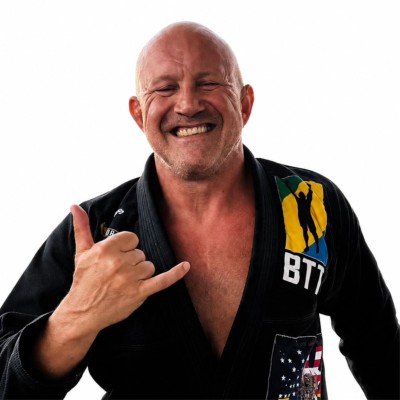
Founder & Principal
JP Donahue is a veteran brand strategist, screenwriter, and founder of Stoned Ape.
View Guest Profile ↗
Stoned Ape is a creative consultancy and strategic advisory firm founded by JP Donahue. Based in Costa Rica, Stoned Ape...
Learn More About Partner ↗Developed by JP Donahue using screenwriting techniques, the Superhero Questions framework is a series of prompts that forces a cannabis brand or individual to define their origin story, target audience, values, and distinct style, replacing vague marketing jargon with clear storytelling.
In a mature legal market, cannabis quickly becomes a commodity, resulting in price wars and a race to the bottom. JP explains that a powerful brand changes the consumer's buying criteria from 'price per gram' to 'the experience,' which protects margins and commands premium pricing.
A brand is a promise made to the consumer. JP argues that if a dispensary's website looks high-end but the physical store is dirty, has unfriendly security, or lacks proper menus, the brand promise is broken. Every touchpoint, down to the bathroom's cleanliness, is part of the brand.